bosun lighting
Member Center
Exit
Data is empty
0


  • Home
  • |
  • LED Street Light
  • |
  • Solar Street Light
      • All In One Solar Street Light
      • Separated Solar Street Light
      • Solar Flood Light
      • Solar Garden Light
      • AC/DC Solar Street Light
      • Hybrid Solar Street Light
      • MPPT Solar Charge Controller
      • Ultra-Low Temperature Battery
  • |
  • Smart Street Light
      • Smart LED Street Light
        • 4G/LTE Solution
        • LoRa-MESH Solution
        • PLC Solution
        • RS485 Solution
      • Smart Solar Street Light
        • Solar 4G / LTE Solution
        • Solar LoRa-MESH Solution
      • Smart Street Light Controller
        • CONCENTRATOR
        • GATEWAY
        • NEMA IOT & ZHAGA IOT
  • |
  • Smart Pole
      • Smart Pole 01
      • Modularity Smart Pole 15
      • Solar Smart Pole 01
      • Smart Pole 13
      • Smart Pole 14
      • Whimsical Smart Pole
  • |
  • About Us
      • All Products
      • Projects
      • Technology
      • Free DIALux Design
      • R&D Team & Pro-Laboratory
      • Patent Certifications
      • Exhibition
        • 2025-04 Hong Kong
        • 2025-04 Saudi Arabia
        • 2025-06 Guang Zhou
        • 2025-10 Hong Kong
      • Resource
        • BOSUN Info
        • News
        • Specification Brochure Download
        • Blog
        • Video
        • F.A.Q
        • Warranty Policy
  • |
  • Contact Us
      • Privacy Policy
  • |
  • Urban Lighting Design
      • India One-Stop Solar Solution
image English
  • image English
  • image Español
HomeBOSUN InfoBLOG
Smart Pole Accessory Modules for Middle East Smart Cities
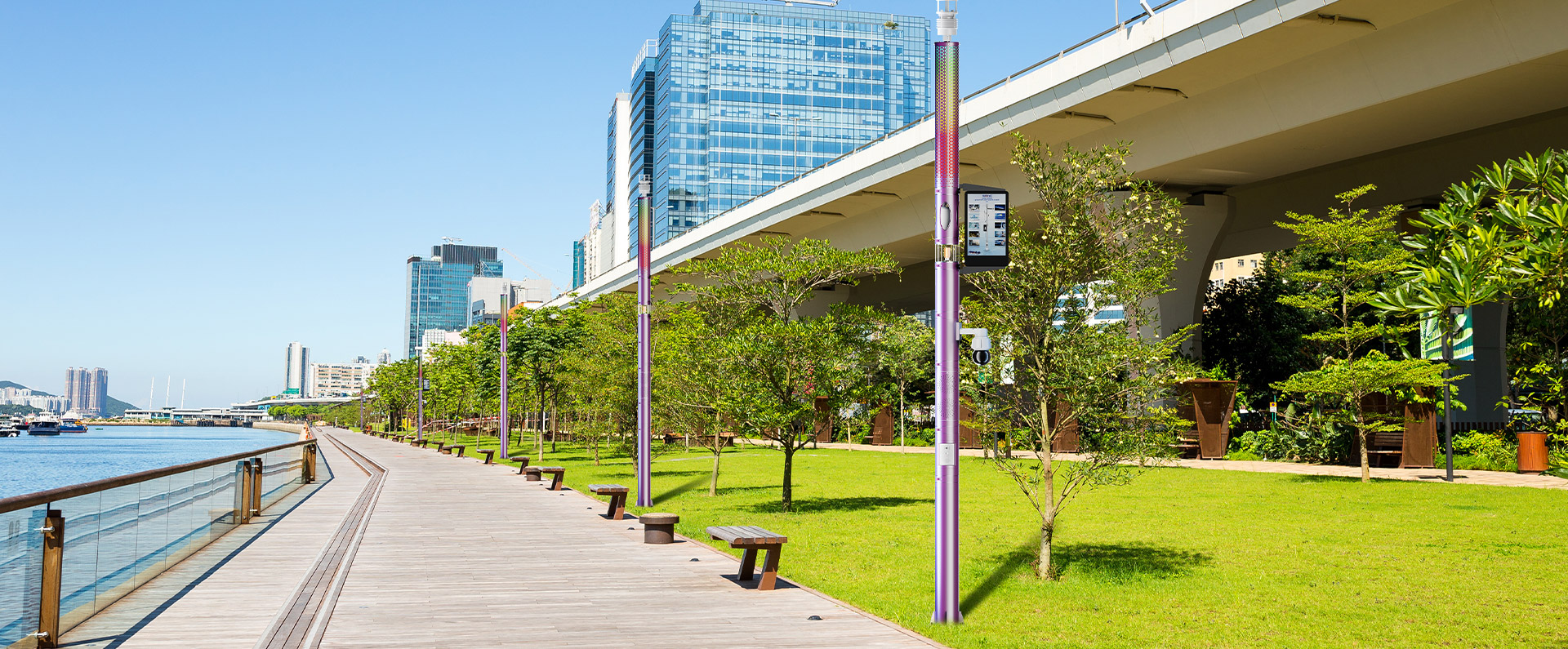
Smart Pole Accessory Modules for Middle East Smart Cities

2025-04-26
The Middle East is rapidly advancing smart city initiatives—from the UAE’s Smart Dubai and Abu Dhabi’s urban innovation programs to Saudi Arabia’s NEOM and Vision 2030 goals. Central to these efforts is the transformation of ordinary street infrastructure into multi-functional smart poles. BOSUN Lighting (with over 21 years of experience) offers a suite of smart pole accessory modules designed to meet Middle Eastern cities’ demands for energy efficiency, safety, and urban management. BOSUN’s solutions are CE-certified and internationally compliant, with IP65/IP66 weatherproofing for desert conditions and seamless integration into IoT platforms. These high-tech poles combine LED lighting with optional devices like surveillance cameras, digital displays, EV chargers, Wi-Fi access points, environment sensors, and emergency call boxes—turning each lamp post into an “urban infrastructure hub”
Figure: BOSUN smart poles in diverse applications (school, park, parking lot, pathway, urban road, square), illustrating versatile deployments. These poles can carry any combination of surveillance cameras, screens, chargers, Wi-Fi routers, sensors, and more.

BOSUN Lighting: Experienced Leader in Smart Pole Solutions

BOSUN Lighting is a national high-tech enterprise and LED outdoor lighting manufacturer based in Guzhen, Zhongshan, China. For 21 years, BOSUN has focused on city lighting solutions and smart poles, earning a reputation “at the forefront” of the industry​. The company provides a comprehensive one-stop service: from standard solar and LED street lamps to fully customized smart poles for urban roads and remote areas​. Its product line includes solar street lights, LED street lights, smart poles, and IoT lighting systems, all engineered to enhance urban infrastructure for modern smart cities​. BOSUN’s modular pole designs allow cities to start with a basic light or solar lamp and later add optional modules as needed.

BOSUN operates large-scale factories with dedicated R&D and engineering teams. Over the past two decades, it has executed numerous projects worldwide, extending its “popularity” across many countries​. (Bosun’s products are already deployed globally, including in Europe, North America, Africa and Asia​– for example, its website notes shipments even to Egypt and Jakarta​, signaling applicability in Middle Eastern climates.) The company maintains strict quality control (ISO9001-certified) and holds multiple international certifications such as CE, RoHS, EMC, SAA, LM-79, CCC, etc​. Its lighting products earn IP66 ratings, meaning they are completely dust-tight and protected against heavy rain – a key advantage for the Middle East’s dusty, sandstorm-prone environment​.

 In short, BOSUN offers a proven track record and technical strength. Its specialists in IoT lighting and smart city hardware can deliver end-to-end solutions (design, engineering, production, and support), backed by professional DIALux lighting designs and post-sale service​. This level of expertise distinguishes BOSUN in a market where some competitors focus only on individual components. For example, some Chinese solar lighting suppliers emphasize basic LED lamps (Anern’s solar street lights are IP65-rated​) or simple smart poles. By contrast, BOSUN integrates multiple subsystems and offers a unified smart platform.
  

Smart Surveillance Cameras

Smart surveillance cameras are among the most valuable accessories on a smart pole, directly enhancing public safety and urban management. BOSUN’s integrated camera modules typically use HD network dome or bullet cameras with multi-megapixel sensors, supporting full-color imaging and all-weather operation​. These cameras feature built-in pan/tilt/zoom (PTZ) and intelligent 3D positioning or “multi-target tracking,” delivering “all-weather high-definition” video feeds. In practice, BOSUN camera poles are used to monitor highways, railways, airports, ports, public squares, parks, and schools.
By mounting these cameras on street poles, cities can achieve wide-area video surveillance without installing separate towers. The cameras feed into BOSUN’s cloud-based monitoring platform over 4G/5G networks, enabling centralized security control. When an incident occurs (e.g. traffic accident, crime, or emergency), operators can retrieve live video or recorded clips from the nearest pole cameras. This real-time monitoring deterrent effect itself improves safety, and automatic detection features (motion or license-plate recognition) further enhance urban security. For example, sensors can trigger brighter lighting at night when people or vehicles are detected, reducing hidden spots and crime. With BOSUN’s solution, police and security teams can access footage remotely to evaluate situations before dispatching responders. This integration of lighting and video allows a city to cover more area with fewer devices and with the same pole infrastructure, making surveillance both cost-effective and adaptive. (Indeed, BOSUN’s literature notes that emergency call modules use on-pole cameras to verify incidents for authorities​, illustrating how surveillance links to other pole functions.)
In summary, adding BOSUN’s smart cameras turns ordinary lamp poles into eyes of the city. By networking these cameras, municipalities gain a full range of “visual management” – from traffic flow analysis to crowd monitoring – without the expense of stand-alone towers or pole attachments. This greatly aids urban management, traffic optimization, and incident response. BOSUN poles also integrate with audio and broadcasting devices, so alerts or public announcements can be combined with video. Compared to standalone CCTV cameras, BOSUN’s smart pole cameras share power (often solar-battery) and communication backhaul with the lighting system, simplifying installation.

LED Display Screens

LED display screens on lamp poles serve multiple smart-city roles: public information, advertising revenue, and emergency alerts. BOSUN offers high-brightness LED panels that mount to the pole or pole mast. Though each individual screen is relatively compact, cities commonly deploy multiple screens per pole to cover both sides of a road or walkway. These pole-top displays are connected via 4G/5G or Wi-Fi and can be remotely updated. For example, one industry case notes that pole screens “can be remotely controlled via 3G/4G/WiFi” and content can be changed “anytime and anywhere”​. In practice, BOSUN can tailor content management software so screens show news, cultural messages, weather, or digital signage when idle.
Because BOSUN’s screens are fully outdoor-rated, they feature ultra-high brightness (often ≥6000 nits) and automatic dimming to avoid light pollution​. The LED cabinets are slim and lockable, with reinforced brackets for safety​. They also match the pole’s IP66 ingress protection (a competitor example notes IP65 for such displays​). By using BOSUN’s IoT platform, a city can centrally control all pole displays: advertising campaigns or alert messages are pushed from a control center to hundreds of poles in real time. This centralized control was touted by a display manufacturer as “centralized management” where one terminal controls all displays simultaneously​.
In the Middle East context, LED pole screens can broadcast multilingual information (e.g. Arabic and English), live emergency alerts (sandstorm warnings, traffic advisories), and public health announcements. They also create new revenue streams: digital advertisements on high-traffic corridors or tourist areas (hotels, malls, public squares) can recoup costs. By combining these displays with BOSUN’s energy-efficient LED streetlights, cities keep power consumption low while adding significant communication capacity. In summary, BOSUN’s pole-top LED screens replace static billboards and traditional bus-stop ads with modern digital signage – enhancing citizen engagement and even helping wayfinding or branding for city events. These screens, like all BOSUN equipment, come with weatherproof enclosures and CE certification, ensuring reliability in desert heat and humidity.
  

EV Charging Stations

Integrating EV charging stations into smart poles addresses the region’s growing electric mobility goals. BOSUN’s poles can be equipped at their base (or on adjacent bollards) with charging outlets for electric cars, bikes, or scooters. These chargers can range from 3.3 kW AC sockets to fast DC chargers (depending on customer needs), complete with smart metering and payment modules. By colocating EV chargers with streetlights, utilities use the existing wiring and space efficiently. In solar-powered pole systems, BOSUN even offers hybrid configurations where part of the solar panel output charges batteries and another part feeds EVs, maximizing renewable use.
The role of these chargers is two-fold: energy efficiency and convenience. In parking lots or street-side parking (common in commercial districts), BOSUN EV chargers entice drivers to plug in while shopping or working. Over time this reduces reliance on fossil-fuel vehicles (important for Middle Eastern sustainability targets) and leverages idle night-time grid capacity. Intelligent charging controls can be added so that charging schedules avoid peak grid hours, further smoothing demand. From a smart city viewpoint, each BOSUN EV module can communicate consumption data back to the city’s energy management system, helping planners assess usage patterns.
For example, BOSUN’s Smart Pole 17 product (commercial parking version) combines LED lighting and EV charging in one post. Compared to standalone chargers from competitors, BOSUN’s solution is multifunctional: drivers charge under a lit canopy that also hosts surveillance cameras and Wi-Fi. This synergy improves site security and user comfort. While BOSUN does not publish a detailed spec online, their promotional materials (as seen on social media) emphasize “efficient lighting and EV charging… ideal for commercial parking lots” (a Twitter preview stated “Smart Pole17 combines efficient lighting and EV charging” for property management). In contrast, many lighting competitors offer charging as an option on some pole models but may lack BOSUN’s integrated platform or weatherproofing features. BOSUN chargers are CE/UL certified and built for outdoor use (e.g. IP54 on the sockets inside the IP66 pole cabinet), ensuring durability even in Gulf weather.
Overall, BOSUN’s EV charging pole modules empower cities to support electric vehicles without requiring separate infrastructure. They align with energy efficiency by enabling smart (even solar-coupled) charging, and fit seamlessly into traffic hubs and parking facilities. By investing in such poles now, Middle Eastern municipalities signal commitment to cleaner transportation, matching global smart-city trends.
  

Public Wi-Fi Modules

Public Wi-Fi access points transform lamp poles into internet hotspots, bridging digital connectivity gaps. BOSUN’s smart poles can carry industrial-grade wireless routers or gateways in weather-sealed boxes. For instance, the BOSUN BS-AP720 outdoor Access Point runs at 300 Mbps and covers up to 300–500 m diameter​. It supports multiple modes (bridge, client, AP, gateway) and relays, meaning one pole’s Wi-Fi can link others back to a wired backhaul. In practice, cities deploy these on poles to blanket public areas (parks, plazas, business districts) with free or low-cost Wi-Fi. This enhances convenience for residents and tourists, and supports IoT devices (smart meters, sensors, ticket kiosks) that rely on wireless connectivity.
From an urban management perspective, Wi-Fi on poles also creates a network of nodes for city sensors. For example, traffic sensors or air quality monitors may send data via the same Wi-Fi AP back to central servers. BOSUN’s AP units often include antenna arrays for directional links to each other or to existing 4G/5G towers, effectively extending broadband to where fiber is too costly. Importantly, BOSUN integrates this networking hardware into the pole design so that the radio and antennas share the pole structure (and even solar power), rather than requiring separate masts. This yields a neater streetscape and lower maintenance.
A cited example from BOSUN’s site describes equipping each smart pole with a wireless router to realize “4G/5G-to-WiFi” conversion, covering public spaces​. In technical terms, when the pole’s main lamp controller has a SIM card (or an Ethernet uplink), it can feed internet to the AP. The AP then broadcasts a mesh network or hotspot. Users and devices join the SSID and get online. This architecture means that any pole can become a mini base-station, providing city-wide network resilience. Compared to competitors, BOSUN’s advantage is its turnkey integration: instead of adding a consumer-grade router, BOSUN installs rugged, certified industrial APs (with surge protection and temperature ratings for hot climates) built into the pole’s design.
The result is a bonus digital utility. Middle Eastern cities can use pole Wi-Fi for smart parking sensors, transit info, or even tracking footfall by anonymized device counts. In emergencies, a downed cell network may be mitigated by the mesh of pole-based Wi-Fi. For the public, free Wi-Fi at bus stops, tourist areas, or along promenades enhances the city brand. In competitive terms, some Western companies sell Smart Poles with Wi-Fi (e.g. ABB or iNELS in Europe), but BOSUN delivers it at typically lower cost with mature solar or AC power options, and can easily combine Wi-Fi with solar lighting in remote zones. This is especially valuable in new Middle Eastern developments where wired connectivity is not yet in place.
  

Environmental Monitoring Sensors

Smart poles often serve as environmental monitoring stations, and BOSUN offers sensor packages to capitalize on this. These may include air quality sensors (for PM2.5/PM10, CO, NOx), weather sensors (temperature, humidity, wind speed, rain), noise detectors, and more. By installing these on poles, cities create a fine-grained monitoring grid for urban health. For example, a pole in a traffic-dense intersection might measure nitrogen oxides and particulate matter, while a residential street pole tracks humidity and noise levels. All data is fed via the pole’s IoT network to a central dashboard.
 
The insights from these sensors are critical for city planners. As one industry report notes, real-time air quality metrics “deliver the insights for municipalities to make decisions for urban planning, for industrial operations to mitigate their impact”. In plain terms, BOSUN poles can help a Dubai municipality detect a pollution hotspot near a busy road and decide to adjust traffic flow or plant barriers. Meanwhile, humidity and rainfall data can control irrigation systems or flood alerts. Collectively, environmental sensors turn lamp posts into urban observatories. The data also ties into energy efficiency: by knowing weather and light levels, the lighting control system can dim or brighten LEDs appropriately, reducing wasted electricity.
BOSUN’s sensor modules interface with its smart pole controller or separate IoT gateways (NB-IoT, LoRa, or 4G). Because BOSUN already builds IoT backhaul into its poles, adding sensor nodes is straightforward. The company’s smart-city platform (SCCS) can visualize this data and trigger automated actions (e.g. if CO spikes, send alerts to commuters or even adjust nearby street fan speeds). The environmental utility of these poles aligns well with regional priorities: Gulf cities are increasingly concerned about sand dust levels and urban air quality. By deploying poles with particulate and gas sensors, authorities comply with regulations and ensure public health. In line with this, a Digi International white paper explains that IoT environmental sensors “provide an effective, efficient way to monitor and support a healthy environment” and help reduce carbon footprints through data-driven insights​. BOSUN’s solution enables just that, using each light pole not only for light but as a data-collection point in the smart city.
As a point of comparison, many competitors do not emphasize sensors or only offer simple modules. BOSUN’s value lies in easy integration: the same pole that carries a camera or display can hold sensor probes, all connected to the same platform. Because BOSUN’s poles are solar-ready, remote environmental stations can be placed in green belts or industrial zones where grid power is scarce. The high IP rating (≥IP65) ensures sensors endure dust storms and occasional rain. Thus, BOSUN poles help Middle Eastern cities become more livable by offering precise environmental feedback alongside lighting and security.
  

Emergency Call Boxes

Emergency call boxes on smart poles offer citizens direct communication with first responders. BOSUN installs intercom-style buttons (with microphones, speakers, and sometimes video cameras) on its poles to create instant lifelines. When a person presses the “CALL” button, it automatically connects to the city’s security center or police dispatch. The pole’s camera can spring into action, sending a live picture or video to the control room so that operators know exactly who is calling and why​. Meanwhile, the call box itself may also send up-to-the-second location data or even trigger a GPS alert on the connected platform.

The benefit is swift, targeted response. For example, in a deserted parking lot late at night, a stranded motorist or endangered pedestrian can use the pole’s call box to summon help immediately. The control center, seeing through the pole’s camera, can send police directly rather than waiting for a 911 call. This increases the feeling of safety in public spaces. BOSUN call boxes are also designed for harsh outdoor use: stainless steel housings, vandal-resistant buttons, and IP54 ingress protection (inside the IP66 pole) ensure they work even if it pours or in high heat. Some advanced systems even include SOS lights that flash above the button to guide responders.

According to BOSUN documentation, when an emergency is reported via the pole, the system “will collect small video, images and other information content in real time back to the monitoring center,” enabling efficient case handling​. In effect, the pole’s camera and call button work as one: the camera gives context to the emergency, while the button provides a human interface. Compared to older standalone call-box infrastructure (e.g. payphones or street beacons), BOSUN’s smart pole solution is more cost-effective because it piggybacks on the existing pole’s power and connectivity. In the Middle East, where rapid law enforcement response is critical and mountains or highways may be remote, these call-equipped poles are particularly valuable.

Even beyond safety, emergency boxes can serve as tourist information or assistance points (multi-language voice prompts for metro stations, for instance). They emphasize a city’s commitment to public welfare. BOSUN’s design ensures quick installation (the modules fit the pole base or side) and integration with any dispatch system. In summary, Emergency Call Boxes on BOSUN poles boost public security and confidence. They leverage the same IP66 pole and IoT network as other modules, meaning maintenance is unified. This holistic approach, packing cameras, lighting, and communication, sets BOSUN apart from vendors that offer only single-function poles.


Energy Efficiency, IoT Integration, and Smart City Benefits

Beyond individual accessories, the collective intelligence and efficiency of BOSUN smart poles define their value. All optional modules connect to BOSUN’s IoT control platform (supporting 4G/LTE, NB-IoT, LoRa, or wired Ethernet). This allows remote monitoring and centralized management of the entire streetlight-and-accessory network. For example, BOSUN’s Smart Pole Controller – a 4G lamp controller with an integrated MPPT solar charge unit – ensures that solar poles maximize energy harvest and that LEDs use only needed power​. The IoT platform can auto-dim lights during off-peak hours, track each device’s power draw, and detect faults (a lamp outage or a failing camera gets flagged immediately).

This tight integration drives energy savings on multiple fronts. First, the core LED lighting is highly efficient (Bosun uses Class-A LEDs and smart drivers) and can be dimmed or motion-activated by the platform. Second, solar-pole variants capture the sun’s energy with patented double-MPPT controllers​, reducing grid load or eliminating it altogether. Third, EV charging and displays use power on demand – displays can turn off late at night, and chargers can cap output to preserve grid stability. Environmental sensors even feed data to automatically adjust lighting; for instance, lights can glow brighter on foggy nights if visibility sensors indicate need. All these measures align with a 2023 study on IoT streetlights, which found that smart lamps can cut maintenance and energy costs dramatically. BOSUN’s long-life LEDs and robust enclosures further minimize upkeep (21+ year warranty on lamp bodies).

For urban management and analytics, the data flow is invaluable. Traffic cameras and environmental sensors together build a picture of city health. The IoT platform dashboards allow officials to “sculpt” lighting schemes, change display content, and schedule charger availability from a PC or smartphone. Cities can even integrate BOSUN’s system with other smart-city platforms (via open APIs). In short, a network of BOSUN smart poles functions as a distributed sensor/actuator grid. This is more than just lighting – it’s city infrastructure on poles.

In practice, many BOSUN projects deploy the Smart City Control System (SCCS) to unify data. Such centralization was highlighted in a third-party report: like “deploying IoT to manage traffic flow in cities” can drastically reduce emissions​, so too can using pole networks to optimize lighting and resources. By harnessing IoT, BOSUN poles ensure the city’s public lighting and accessories are not isolated gadgets but part of an intelligent whole. For Middle Eastern cities aiming to be “highly-developed smart cities,” this means better energy management, lower carbon emissions, and an infrastructure ready for future services (like 5G small cells on poles).

Comparatively, few competitors match BOSUN’s complete integration. For instance, Solar Lighting International (an American firm) highlights its decades of solar lighting experience and “advanced IoT smart city control options” for monitoring​. BOSUN not only matches such features but also embeds them into each pole module by default. BOSUN’s on-pole processors and apps can control every function remotely – a turn-key advantage over rivals who may sell a Wi-Fi panel separately or a camera on its own. In sum, the synergy of BOSUN’s accessories – cameras feeding the same network as chargers and sensors – exemplifies how a smart pole should work as an ecosystem, maximizing city-wide benefits.

Competitive Advantages and Certifications


First, Experience and Scale: BOSUN’s 21-year focus on urban lighting (as a factory-direct manufacturer) has enabled cost efficiencies. Unlike some competitors that operate as trading companies or small factories, BOSUN produces all key components (solar panels, LEDs, batteries, controllers) in-house. This vertical control helps BOSUN quickly meet project deadlines and customization needs. Second, Certifications and Quality: BOSUN smart light poles have certifications such as CE, RoHS, CCC, SAA, IP66, etc.
In hot and dusty climates, IP66 and IP65 protection ratings can mean the difference between reliable year-round operation and frequent maintenance.

BOSUN is ISO9001 certified and UL/IEC tested, and its electronics are rated for high temperature and voltage surge resistance. These qualifications give customers in the Gulf region peace of mind that its equipment meets international standards. Third, Breadth of Technology: Few competitors can offer BOSUN’s accessory portfolio. BOSUN’s sub-brand Gebosun® explicitly sells modular smart poles that integrate cameras, displays, chargers, sensors, and radios.
BOSUN’s patented MPPT charge controllers, NB-IoT gateways, and luminaire controllers (all protected by patents) underscore its technological leadership. For example, BOSUN’s dual MPPT solar controller (a featured product of its SCCS platform) is unique in combining communications with solar charging.
Finally, market support and service: BOSUN’s global project experience includes projects in some of the Middle East (e.g. Egypt, Milan, etc.).
BOSUN offers customized DIALux design and 3D modeling, free lighting simulations, and responsive technical support. This is in stark contrast to product-oriented companies that may not provide end-to-end consulting services. In short, BOSUN is unique in that it is a one-stop smart lighting and pole supplier, not a component supplier. Its strong R&D team (staff engineering team) and factory-supported supply chain mean that Middle Eastern customers can trust BOSUN’s product quality and project execution capabilities. BOSUN’s value proposition is “total solution” – high-performance modules coupled with a powerful IoT backbone – ensuring that smart pole deployments are not a patchwork of third-party components, but a unified BOSUN system.

Conclusion: Enabling Smart, Efficient Cities in the Middle East
As Middle Eastern cities strive for sustainability and technological leadership, BOSUN Lighting’s smart pole accessories offer a compelling solution. Each BOSUN smart pole can be tailored – cameras for safety, LED screens for communication, EV chargers for green mobility, Wi-Fi routers for connectivity, sensors for environment, call boxes for emergency – all running on intelligent control software. This multi-functionality (combined with BOSUN’s 21+ years experience, international certifications, and IP66-rated hardware) ensures that city planners get reliable, long-life infrastructure.
In sum, BOSUN Lighting’s smart pole systems are designed to reduce energy use (via solar LEDs and smart controls), improve urban management (with IoT data and surveillance), and enhance public safety (with integrated alerts and cameras) – exactly the goals of Gulf smart-city agendas. Compared to competitors like Anern or Solar Lighting Intl, BOSUN brings a broader “total solution” advantage. For Middle Eastern clients and contractors, BOSUN’s smart poles promise future-proof, efficient streetscapes: welcome to the next generation of connected lighting.


Related News

  • image Smart Street Light Deployment for Transportation Infrastructure in Indonesia
    2026-04-13 0
  • image What Is a NEMA Controller?
    2026-03-31 0
  • image Best Solar Street Light Manufacturer? Start With These Questions
    2026-03-19 0
  • image Full-Scope Solar Street Lighting Packages & Custom Solutions for Municipalities & Developers
    2025-11-26 0
  • image Cloud-Synergy Smart Street Light Surveillance System for Smart City Development
    2025-11-17 0
  • image How Do Solar Lights Work?
    2025-10-24 0
  • image Clarification about Solar Wind Turbine Street Light: Preferred Choice for Remote Area Lighting & Wind Power System
    2025-10-16 0
  • image The Most Intelligible Instruction about Intelligent Solar Street Light​ & Engineering Project Showcase
    2025-09-26 0
  • image Integrated solar street lights promote urban lighting progress
    2025-08-18 0
  • image What is the Life Expectancy of the Solar Panel, LED Fixture, and LiFePO4 Batteries?
    2025-08-12 0
  • image Feasibility of LED Photovoltaic Lighting System in Municipal Construction

    2025-08-07 0
  • image Roadway Lighting Solutions | JH Series for Municipal Projects
    2025-07-30 0
  • image How to Design & Realize LoRa-MESH IoT Solar Street Light City Project?
    2025-07-19 0
  • image How to Design the Perfect Well-Considered Smart Light Pole City Road Lighting Solution?
    2025-07-16 0
  • image Design and Application of All-in-One Solar Street Light with MPPT Charge Controller

    2025-06-26 0
  • image The Ultimate Guide to City Street Light Poles and Smart LED Lighting
    2025-06-04 0
  • image Understanding the Differences Between All-in-One, All-in-Two, and Split Solar LED Street Lights
    2025-05-20 0
  • image Applications and Fundamentals of Lithium Batteries in Solar Street Lights​
    2025-05-13 0
  • image Hybrid Solar Street Lighting: Renewable Energy Pros and Cons of Solar, Wind, and the Future
    2025-04-08 0
  • image Solar Flood Lights Transforming Sports Facilities
    2025-03-24 0

-

Bosun Lighting company address
Bosun Lighting contact number
bosun lighting email address

PHONE & WHATSAPP

+86 186-7602-4888

EMAIL

bosun3@bosunlighting.com

SHARE

Floor 4-5, Building 2, Tongyi Qifang Industrial Area,Guzhen Town, Zhongshan City, China

©2019-2026 zcy All rights reserved.

粤ICP备12019139号 粤公网安备44030502001115号

bosun lighting

RESOURCE

VIDEO

WARRANTY POLICY

Free DIALux Design

Professional laboratory

BLOG

F.A.Q

ABOUT US

PROJECTS

NEWS

TECHNOLOGY

PRODUCT

LED STREET LIGHT

SOLAR STREET LIGHT

SMART STREET LIGHT

SMART CITY

CONTACT US

FACEBOOK

LINKEDIN

INSTAGRAM

TWITTER

YOUTUBE

QUORA

ADDRESS

PINTEREST

(341396)