
Why Smart Street Lights Deliver the Highest ROI in Modern Smart City Technology?
author: Aurora
2025-11-22







Why Smart Street Lights Deliver the Highest ROI in Modern Smart City Technology?
The global shift toward smart city development has transformed the way governments, industrial parks, municipal planners, and infrastructure companies evaluate road lighting investments. The search data shows unmistakable growth in the global interest around smart street lights, adaptive street lighting, IoT lighting, and smart city technology. At the same time this indicates that executive-level decision makers—not just engineers—are actively exploring smart lighting solutions. This reflects a deeper pattern: the market increasingly wants to understand the investment logic, the long-term cost savings, and the operational ROI behind modern smart street lighting systems.
City leaders around the world are abuzz with the profound potential of incorporating smart technologies into everything from their transport infrastructure to water systems to power supply and, of course, to government services. Indeed, smart cities are beginning to come to life in various forms. Cited from McKinsey.
This article combines strategic insights, technical analysis, financial evaluation, and real-world smart lighting application cases to demonstrate why smart street lights deliver one of the highest returns on investment among all smart city technologies.

Why ROI Has Become the Central Question for Smart Street Light Buyers?
Traditional LED street lighting remains one of the largest ongoing municipal expenses. Electricity bills and maintenance costs account for 60–70% of a street lighting system's lifetime cost, even before upgrades or repairs. For decades, cities had no viable alternative: they were locked into expensive, energy-intensive lighting infrastructure.
However, Data shows a surge in executives searching for smart lighting solutions. The prominence of the topic "Chief Executive Officer – Project Role" within Smart Light–related trends suggests that the financial evaluation of smart street lights is increasingly handled by CEOs, chief sustainability officers, municipal leaders, and CFO-level decision makers. This is not surprising. Smart street lights are no longer simply hardware—they are capital investments with direct financial outcomes.
Modern smart street lighting systems integrate:
- IoT-driven monitoring
- Adaptive illumination
- Predictive maintenance
- Automated dimming
- Energy analytics
- Smart controllers
- Wireless communication
These features combine to form a powerful cost-reduction engine that cuts operational expenses and accelerates ROI.
Understanding the Technical Foundation: IoT Lighting and Smart City Technology
To evaluate ROI accurately, it is necessary to understand how modern smart city lighting systems work. The backbone of smart lighting is IoT integration, allowing each street light to act not just as a lamp, but as a connected, intelligent device.
What Is IoT Lighting?
IoT lighting refers to luminaires connected via communication networks such as: NB-IoT, LoRaWAN, Zigbee, LoRa-MESH (Solar), 4G/LTE (Solar).
These networks allow: Remote brightness control, Real-time monitoring of every light, Automated scheduling, Intelligent fault detection, Energy consumption analytics, Battery and LED health tracking (for solar systems).
The popularity of the query "do smart light bulbs use electricity when off" indicates that users want technical clarity about energy use. Smart street lights do consume minimal standby power—measured in milliwatts, not watts—but this negligible consumption is massively outweighed by the 30–70% energy savings created by intelligent dimming and adaptive lighting.
Smart City Technology Integration
Smart street lights function as key infrastructure in urban digitalization. They can host: Air quality sensors, CCTV and AI-based security systems, Traffic flow detectors, Weather and environmental sensors, Public Wi-Fi hotspots, EV charging ports, 5G microcells, Digital signage. This transforms street lights from cost centers into revenue-generating, data-producing smart city assets.
Adaptive Street Lighting: The Engine of Energy Savings
Among all the features captured in smart street light systems, adaptive lighting is the most impactful for reducing energy consumption and accelerating ROI. Google Trends shows a strong worldwide upward trend for "adaptive street lighting," signaling rising interest in energy optimization.
Why Adaptive Smart Lighting Achieves 70% Energy Savings?
Traditional LED street lights, although more efficient than HPS lamps, still waste significant power because they run at fixed intensity. Adaptive lighting optimizes every lumen based on real environmental conditions.
- Lower operating hours at full brightness
- Continuous dimming when roads are empty
- Intelligent power distribution
- Reduced thermal stress, extending LED lifespan
- Elimination of over-illumination
Energy Savings from Adaptive Lighting and Intelligent Controls
A standard 250 W high-pressure sodium street light operating 4,000 hours per year consumes roughly 1,000 kWh annually. By contrast, a smart LED street light equipped with adaptive lighting and intelligent lighting controls reduces the effective operating wattage by 60–70%, lowering annual energy use to 330–400 kWh per pole.
This means smart dimming alone generates 600–670 kWh of energy savings per fixture each year, dramatically reducing the operational burden on municipal energy budgets and strengthening the environmental impact of smart city lighting strategies.
Smart Street Light Controllers: The Technological Core
What Smart Controllers Do?
LED driver output
Voltage-current optimization
Dimming curves
Sensor inputs
Fault reporting
Wireless data transmission
Remote configuration
Solar battery management (for hybrid/solar systems)
Voltage-current optimization
Dimming curves
Sensor inputs
Fault reporting
Wireless data transmission
Remote configuration
Solar battery management (for hybrid/solar systems)
Why Controllers Determine ROI?
Replacing manual inspections with real-time fault alerts
Preventing premature LED failures
Lowering unnecessary brightness output
Stabilizing power consumption
Providing energy reports for auditing and compliance
Without controllers, a city cannot unlock the full value of IoT lighting or adaptive systems.
Preventing premature LED failures
Lowering unnecessary brightness output
Stabilizing power consumption
Providing energy reports for auditing and compliance
Without controllers, a city cannot unlock the full value of IoT lighting or adaptive systems.


Smart Lighting ROI Calculation: A Transparent Financial Model
Annual Energy Cost Savings
Smart street lights equipped with IoT lighting controls and adaptive street lighting technologies can reduce electricity consumption by 30–70%, depending on traffic conditions, sensor deployment, and dimming strategies.
Maintenance Cost Reduction
Traditional street lighting systems require frequent inspections, manual fault identification, and reactive maintenance—activities that typically account for a substantial portion of annual operating expenditure. Smart street lights use networked controllers that provide real-time fault alerts, enabling predictive maintenance and eliminating unnecessary site visits. Industry case studies indicate maintenance savings of approximately 40–60%.
Improved Lifespan and Asset Preservation
LED longevity is heavily influenced by operating temperature, electrical stability, and runtime hours. Smart street light controllers stabilize current flow, regulate thermal output, and prevent unnecessary full-power operation, which slows LED degradation. Systems with adaptive dimming often extend LED lifespan by 20–30%, reducing the frequency and cost of replacement components.
Evaluating Payback Period
A combined evaluation of energy savings, maintenance reduction, and lifespan improvement produces a highly competitive payback period compared with other smart city technologies. Independent analyses conducted by McKinsey and DOE-backed pilot programs consistently place smart lighting payback in the range of 2–4 years, depending on existing infrastructure conditions and electricity tariffs.
Strategic Value Beyond Direct Financial Savings
support for 5G microcells and improved urban connectivity
enhanced public safety through integrated sensors and cameras
reduced carbon emissions supporting ESG commitments
data collection capabilities that enable additional smart city services
These indirect benefits reinforce the argument that smart lighting is a foundational technology for urban digitalization.
enhanced public safety through integrated sensors and cameras
reduced carbon emissions supporting ESG commitments
data collection capabilities that enable additional smart city services
These indirect benefits reinforce the argument that smart lighting is a foundational technology for urban digitalization.


ROI Drivers in Smart Street Lighting - Less Maintenance
Reducing even one traditional lighting maintenance cycle can save municipalities approximately USD 80–120 per light pole, once labor, truck rolls, traffic control, and replacement materials are included.
Because smart street lights greatly extend the lifetime of LED luminaires and eliminate many field interventions through remote diagnostics, cities typically achieve a 30–40% reduction in annual maintenance operations. This maintenance cost reduction is a core reason why smart street lights deliver a significantly higher ROI compared to legacy lighting technologies, especially in large-scale municipal deployments.
Should Governments and Developers Invest Now?
Meanwhile, global electricity prices continue to increase. Therefore, the business case is clear. The earlier a city adopts smart street lighting, the faster the ROI starts.
The longer a city waits, the more money is wasted on inefficient lighting.
Smart lighting upgrades reduce financial risk and operational uncertainty.
For municipalities, EPC contractors, and developers, upgrading to smart lighting is not just a technical improvement—it is a financially strategic move.
Smart lighting upgrades reduce financial risk and operational uncertainty.
For municipalities, EPC contractors, and developers, upgrading to smart lighting is not just a technical improvement—it is a financially strategic move.
Impact on Municipal Budget Reduction and Long-Term Cost Efficiency
When combining the energy savings from adaptive lighting with the maintenance reductions enabled by remote monitoring, smart street lighting systems typically lower municipal lighting budgets by 50–70% annually.
LED efficiency accounts for a large share of the savings, while smart sensors, dimming profiles, and centralized control platforms further reduce operational expenses.
For city governments evaluating long-term financial strategy, these combined efficiencies clearly explain why smart street lights deliver the highest ROI among all modern smart city technologies, often outperforming other infrastructure upgrades in both payback speed and lifecycle value.
FAQ — Smart Street Lights & ROI
How does adaptive lighting improve energy efficiency in modern cities?
Adaptive lighting allows street lights to automatically adjust brightness based on pedestrian activity, traffic flow, weather conditions, and time of night.
By reducing unnecessary illumination, smart lighting controls can cut energy consumption by 60–70%, making them one of the most effective smart city upgrades for long-term sustainability and budget reduction.
What maintenance savings can cities expect with smart street lights?
Smart street lights significantly reduce maintenance frequency thanks to remote monitoring, automatic fault detection, and longer LED lifespans. Municipalities typically see 30–40% fewer maintenance operations, and each avoided maintenance cycle can save USD 80–120 per pole.
How long does it take for smart street lighting projects to pay back the investment?
Most municipalities achieve payback within 3–5 years, depending on electricity prices, dimming strategies, and project scale.
Most municipalities achieve payback within 3–5 years, depending on electricity prices, dimming strategies, and project scale.
Gebosun / BOSUN Smart Street Lighting Engineering Projects:
Saudi Arabia Smart City: Starting with the Smart Pole – A Modular Breakthrough in Smart Outdoor Lighting
Ethiopia's Church Petal-Shaped Smart Light Pole Project
Ethiopia's Street Lighting Design: Smart Pole Layout & Calculations
"Smart Lighting": Custom Smart Light Pole with Fan Project in Coastal Saudi Arabia
Design & Application of Smart Street Light Pole with Solar 4G/LTE Solution in Old City of Saudi Arabia
Ethiopia's Church Petal-Shaped Smart Light Pole Project
Ethiopia's Street Lighting Design: Smart Pole Layout & Calculations
"Smart Lighting": Custom Smart Light Pole with Fan Project in Coastal Saudi Arabia
Design & Application of Smart Street Light Pole with Solar 4G/LTE Solution in Old City of Saudi Arabia
Hot-Selling Smart Street Lights


 A Preview of the 2026 Barcelona Smart City Exhibition: Why Multi-Functional Smart Poles Are Emerging as a New Urban Standard?
  Solar and Batteries Claim 81% of U.S. Power Growth in 2025: Infrastructure Implications for Public Lighting
  Solar & Wind Street Lights vs. Incandescent Grid Lighting: Why Renewable Street Lighting Is the Future
  “All Energy Generation Will Be Solar” – Elon Musk’s Warning on Clean Energy, Solar Power, and Green Energy
 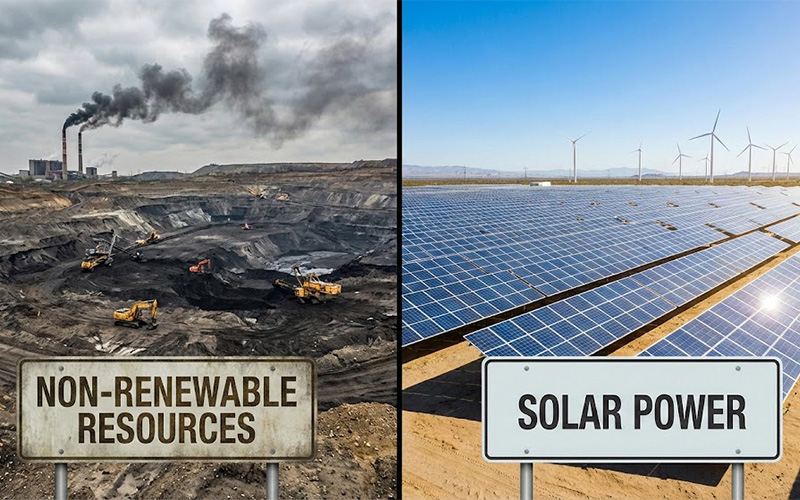 Is Solar Energy Renewable or Nonrenewable? Non-Renewable Resources vs Solar Power: Why Solar Energy Systems (a Renewable Resource) Are Replacing Fossil-Fuel Lighting
  Solar Street Lights vs. Traditional Grid: The Real Cost Breakdown
  How to Choose the Best Smart Solar Street Light to Prevent Street Light Outages?
  Solar Street Lights – Farolas Solares Inteligentes: Long-Term Development, Sustainability, Smart Upgrades, and Economic Benefits for Modern Cities
  The Solar Street Light Industry in 2024-2025: Innovations, Trends, and Leading Brands
 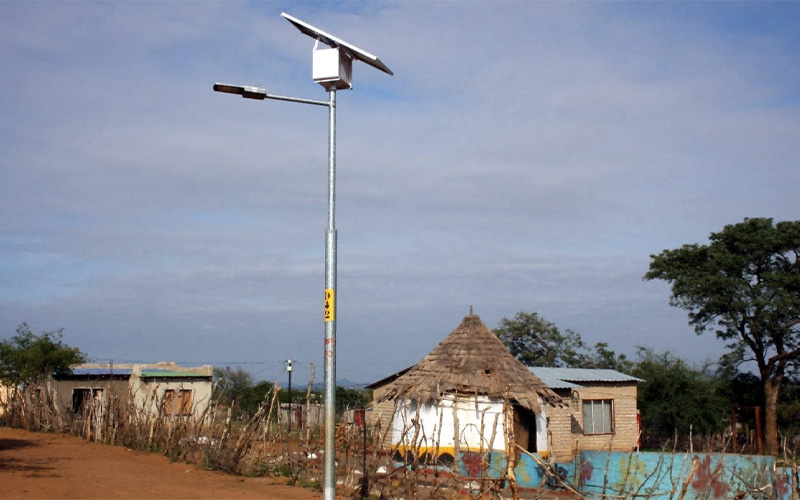 A Solar Street Light Lamp Illuminates the Road to Rural Revitalization
  The Ultimate Instruction Of LED Solar Street Light: How it works and how to maintain
  Solar Street Light Assist To The Net-Zero Future
  Cheap Solar Equipment Is Much Of Which Turns Into E-Waste
  Solar Energy - Concept, Utilization, Advantages, & Launched Projects
  Reduce Energy Consumption Per Unit Of GDP Through Utilize Solar Energy On Outdoor Illumination
  Pull Into Hybrid Wind-Solar Sustainable Energy For Electricity Generation
  Breaking News: Residents Turns To Solar As Antidote
  Philippine Department of Public Works Develops Standard Design for Solar Lanterns on National Roads