
Solar and Batteries Claim 81% of U.S. Power Growth in 2025: Infrastructure Implications for Public Lighting
author: Aurora
2026-02-10







Key Developments from the Solar Industry News
Recent solar industry news indicates a structural shift in the U.S. power sector in 2025, with solar energy and battery storage accounting for approximately 81% of newly added generation capacity. Of the 63 GW of total capacity additions, solar contributed 32.5 GW, while battery storage added 18.2 GW, highlighting the accelerating integration of generation and storage as a unified system rather than independent assets.
Deployment activity has been heavily concentrated in Texas, which alone added 11.6 GW of solar capacity. Within the ERCOT market, solar generation increased by around 27% year-on-year and supplied roughly 61% of incremental demand growth. Battery capacity in ERCOT doubled, primarily to shift daytime solar generation into evening peak periods.
While natural gas remains the dominant source of electricity generation at approximately 42% of ERCOT’s output, solar has now overtaken coal, becoming the third-largest generation source in the region. This transition is occurring alongside rising electricity demand from data centers (Smart City Control System), electric vehicle charging, and urban electrification—all of which place increasing pressure on evening and nighttime power availability.
Industry Interpretation and Secondary Impacts
From an infrastructure and system-planning perspective, the most significant signal in this development is not the absolute scale of solar deployment, but the pace at which storage is being co-developed. The pairing of 18.2 GW of batteries with new solar capacity indicates that market participants are prioritizing dispatchability and temporal alignment with demand rather than pure energy yield.
For public-sector stakeholders, this has second-order implications. As solar energy becomes the marginal source of new capacity, urban infrastructure planners must assume that future grid conditions will include higher daytime generation surplus and tighter evening capacity margins. Battery-backed systems therefore, move from being optional enhancements to essential components of resilient infrastructure.
Procurement frameworks are likely to evolve accordingly, with greater emphasis on:
- Storage-backed performance guarantees
- Energy availability during defined operational windows
- Long-term operational cost stability rather than the lowest initial capital expenditure
Implications for Urban and Public Lighting Infrastructure
The dominance of solar energy and batteries in U.S. power growth directly informs how municipalities and utilities should evaluate solar street lighting and smart pole projects. Public lighting systems are inherently evening-focused loads, making them natural beneficiaries of distributed solar-plus-storage architectures.
In regions such as Texas and other high-irradiance markets, autonomous and semi-autonomous solar street lighting systems can reduce reliance on congested grids while improving service continuity during peak demand periods. For highways, industrial zones, rural roads, and new urban developments, localized generation paired with on-site storage supports faster deployment timelines and reduces exposure to grid interconnection delays.
At a planning level, this trend reinforces the need to treat solar street lighting as part of broader renewable energy infrastructure rather than as isolated lighting assets. Storage sizing, autonomy duration, and adaptive dimming strategies must be specified in alignment with real-world demand profiles and climatic conditions. The same market logic driving utility-scale storage adoption applies at the scale of public lighting—availability at the right time matters more than nominal capacity.
Project & System Experience
As a solar street light manufacturer and smart street lighting solution provider, our deployment experience reflects the same system-level priorities now evident in the wider power sector. Across projects in diverse climatic zones, we have consistently observed that storage configuration and control logic are the primary determinants of long-term system reliability.
In high-temperature and high-growth regions, battery chemistry selection, enclosure thermal management, and conservative depth-of-discharge limits are critical to sustaining performance over the system lifecycle. Evening peak reliability—mirroring the ERCOT market’s focus on post-sunset capacity—has become a defining design criterion in municipal tenders.
Our role extends beyond supplying luminaires or poles. It involves system-level engineering trade-offs: balancing module efficiency, battery capacity, pole height, and control strategies to meet operational requirements while accounting for environmental stressors. This experience-based approach supports the broader industry shift toward integrated solar-plus-storage systems highlighted by current solar industry news.
Technology and Product Direction Aligned with the Trend
The rapid expansion of battery-backed solar generation is directly influencing the evolution of smart street lighting and smart pole systems. Product architectures are increasingly designed around flexibility and future load integration rather than fixed, single-purpose operation.
Key directions include modular battery systems that allow capacity expansion, intelligent energy management platforms that prioritize critical nighttime loads, and infrastructure-ready poles capable of supporting sensors, communication equipment, and future mobility services. Rather than maximizing solar panel wattage, the design focus is on ensuring energy availability during defined operational hours.
FAQs About Solar Power
Why is battery storage now critical for solar street lighting projects?
Because lighting demand occurs at night, storage ensures energy availability during evening peak hours and periods of low solar generation.
Because lighting demand occurs at night, storage ensures energy availability during evening peak hours and periods of low solar generation.
How does large-scale solar growth affect municipal lighting procurement?
It encourages specifications that prioritize storage capacity, autonomy duration, and lifecycle performance over panel size alone.
It encourages specifications that prioritize storage capacity, autonomy duration, and lifecycle performance over panel size alone.
What role does regional climate play in system design?
Temperature and solar variability influence battery selection, enclosure design, and operational strategies.
Temperature and solar variability influence battery selection, enclosure design, and operational strategies.
How do smart poles fit into this energy transition?
They act as distributed infrastructure nodes, supporting lighting and additional services without increasing grid dependency.
They act as distributed infrastructure nodes, supporting lighting and additional services without increasing grid dependency.
Will grid conditions influence future public lighting strategies?
Yes. As grids experience higher daytime surplus and tighter evening margins, autonomous and hybrid lighting systems become more attractive.
Yes. As grids experience higher daytime surplus and tighter evening margins, autonomous and hybrid lighting systems become more attractive.
Solar Street Lighting


 A Preview of the 2026 Barcelona Smart City Exhibition: Why Multi-Functional Smart Poles Are Emerging as a New Urban Standard?
  Solar & Wind Street Lights vs. Incandescent Grid Lighting: Why Renewable Street Lighting Is the Future
  “All Energy Generation Will Be Solar” – Elon Musk’s Warning on Clean Energy, Solar Power, and Green Energy
 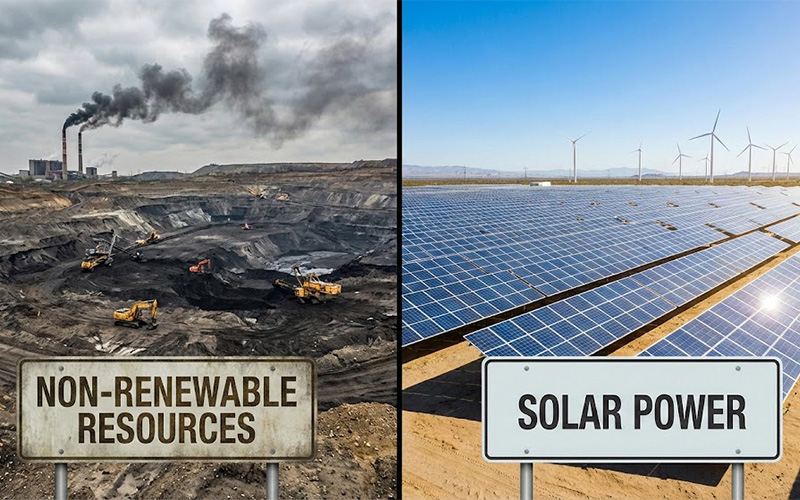 Is Solar Energy Renewable or Nonrenewable? Non-Renewable Resources vs Solar Power: Why Solar Energy Systems (a Renewable Resource) Are Replacing Fossil-Fuel Lighting
  Why Smart Street Lights Deliver the Highest ROI in Modern Smart City Technology?
  Solar Street Lights vs. Traditional Grid: The Real Cost Breakdown
  How to Choose the Best Smart Solar Street Light to Prevent Street Light Outages?
  Solar Street Lights – Farolas Solares Inteligentes: Long-Term Development, Sustainability, Smart Upgrades, and Economic Benefits for Modern Cities
  The Solar Street Light Industry in 2024-2025: Innovations, Trends, and Leading Brands
 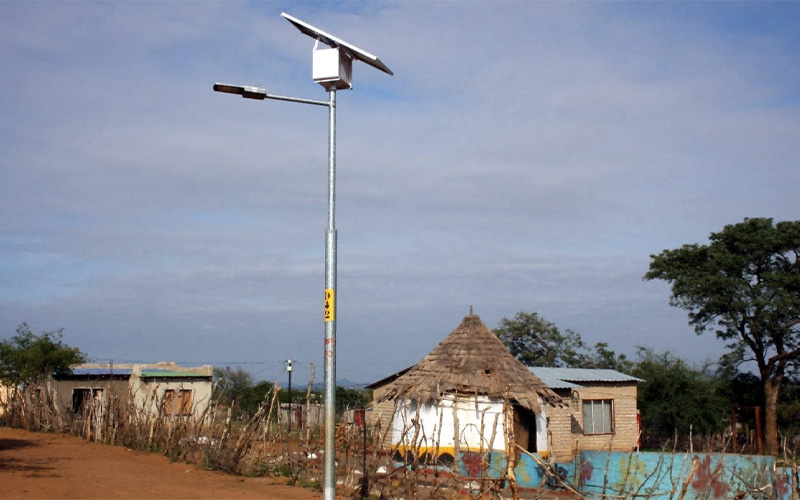 A Solar Street Light Lamp Illuminates the Road to Rural Revitalization
  The Ultimate Instruction Of LED Solar Street Light: How it works and how to maintain
  Solar Street Light Assist To The Net-Zero Future
  Cheap Solar Equipment Is Much Of Which Turns Into E-Waste
  Solar Energy - Concept, Utilization, Advantages, & Launched Projects
  Reduce Energy Consumption Per Unit Of GDP Through Utilize Solar Energy On Outdoor Illumination
  Pull Into Hybrid Wind-Solar Sustainable Energy For Electricity Generation
  Breaking News: Residents Turns To Solar As Antidote
  Philippine Department of Public Works Develops Standard Design for Solar Lanterns on National Roads