
Solar Street Lights – Farolas Solares Inteligentes: Long-Term Development, Sustainability, Smart Upgrades, and Economic Benefits for Modern Cities
author: Aurora
2025-09-02







Main Content:
Introduction: Solar Street Lights in Sustainable Development
Ecosystem Benefits of Solar Street Lights
Smart Technical Upgrades - Smart Solar Street Light
Smart Street Lighting Systems and Single Lamp Controllers
Long-Term Trends: The Future of Solar Smart Pole Technology
Economic Benefits and Cost Efficiency of Solar Street Light
Practical Questions You May Ask
Hot-Cake Solar Street Light
Ecosystem Benefits of Solar Street Lights
Smart Technical Upgrades - Smart Solar Street Light
Smart Street Lighting Systems and Single Lamp Controllers
Long-Term Trends: The Future of Solar Smart Pole Technology
Economic Benefits and Cost Efficiency of Solar Street Light
Practical Questions You May Ask
Hot-Cake Solar Street Light
Introduction: Solar Street Lights in Sustainable Development
As cities move toward low-carbon development and digital transformation, solar street lights have become one of the most strategic infrastructures in modern urban planning. Their ability to generate clean energy, reduce grid dependency, and integrate with smart-city technologies makes them essential for long-term environmental and economic development goals. Unlike traditional grid-powered systems, a solar street light with pole integrates solar panels, batteries (Applications and Fundamentals of Lithium Batteries in Solar Street Lights), and outdoor LED lights, making it an independent, off-grid power solution.

Rapid Market Growth: The market for solar street lighting is experiencing significant and sustained growth. Market research reports consistently show the global market size growing at a Compound Annual Growth Rate (CAGR) of 14% to 17% or more from 2025 onwards. For example, one report estimates the market at around $5.4 billion in 2025, projected to reach $11.0 billion by 2035. Another report projects a market size of $2.38 billion in 2025, growing to $7.80 billion by 2034.
This robust growth indicates that more and more municipalities, businesses, and communities are utilizing these systems. BOSUN® Lighting is dedicated to making a perfect solar lighting solution for various areas and projects. With outstanding expertise in solar street light experiences, we have already won compliments from numerous customers. How To Do Solar Street Light DIALux Lighting Calculation? Maximize Resources For Solar Street Light Advantages.
Solar Street Lights and Long-Term Sustainability Goals
Alignment with Environmental Objectives
Solar street lights directly support global sustainability frameworks, including carbon-neutral strategies, climate resilience programs, and renewable energy adoption. Compared with grid-powered lighting systems, solar street lights:
Reduce CO₂ emissions by 50–70% annually
Eliminate grid electricity consumption
Minimize lifecycle environmental footprint
Enhance energy independence in rural and developing regions
Eliminate grid electricity consumption
Minimize lifecycle environmental footprint
Enhance energy independence in rural and developing regions
Contribution to the Urban Ecosystem
Solar lighting supports a healthier urban ecosystem by:
Reducing air pollution
Lowering noise pollution (no trenching or cabling machinery)
Eliminating risks of underground wiring damage
Allowing flexible deployment without altering natural terrain
Reducing air pollution
Lowering noise pollution (no trenching or cabling machinery)
Eliminating risks of underground wiring damage
Allowing flexible deployment without altering natural terrain
Economic Viability and Long-Term Financial Benefits
Total Cost of Ownership (TCO) Advantage
While the upfront cost of solar street lighting can be higher, its long-term financial performance is much stronger due to the elimination of:
Grid electricity fees
Cable installation costs
Transformer and trenching expenses
Ongoing electricity price inflation
Over a 20-year lifecycle, solar street lights can reduce municipal lighting budgets by 55–75%.
Cable installation costs
Transformer and trenching expenses
Ongoing electricity price inflation
Over a 20-year lifecycle, solar street lights can reduce municipal lighting budgets by 55–75%.
Reduced Operational and Maintenance Costs
The long-term economic benefits are strengthened by:
Fewer maintenance cycles
Longer lifespan of LED luminaires
Remote diagnostics (when integrated with smart controls)
No wiring deterioration or underground faults
Fewer maintenance cycles
Longer lifespan of LED luminaires
Remote diagnostics (when integrated with smart controls)
No wiring deterioration or underground faults
Ecosystem Benefits of Solar Street Lights
Solar lighting solutions directly reduce dependence on fossil fuels, cutting CO₂ emissions by up to 1 ton per light per year compared to grid-powered equivalents. Furthermore, a study found that switching to solar street lights can lead to a 25% reduction in CO2 emissions compared to conventional systems. This translates to substantial long-term carbon savings for municipalities and communities. By using outdoor solar LED lights, energy efficiency improves further, lowering power consumption while achieving higher luminous efficacy. Solar lighting also helps preserve ecological balance in remote or rural areas by minimizing trenching and cable installation, which often disrupts natural landscapes. In addition, professional optics in solar LED street lights reduces light pollution, supporting urban biodiversity and improving human well-being. Not only solar street lights, but we also combine wind energy to enhance the power source, ensuring a stable power supply. Renewable Energy Pros and Cons: Solar, Wind, and the Future of Hybrid Street Lighting.


Smart Technical Upgrades - Smart Solar Street Light
The performance of solar street lights with pole has dramatically improved thanks to the smart IoT technical upgrades:
- High-efficiency solar modules: Monocrystalline panels with >22% conversion efficiency.
- Long-life LiFePO₄ batteries: 8–12 years lifespan, 2000–4000 cycles. Check on the BOSUN® ultra-low battery that withstands extreme cold weather.
- Smart controllers: Pro-Double MPPT solar charging, adaptive dimming, IoT, 4G/LTE, and LoRa-MESH connectivity.
- Advanced LED optics: Batwing distribution lenses ensure uniform lighting.
The importance of smart solar street lights for future development cannot be overstated. They are not simply a more sustainable alternative to traditional lighting; they are a foundational component of the smart city infrastructure. By integrating solar technology with the Internet of Things (IoT), they transform from simple light sources into a connected, intelligent network that improves public safety, enhances urban efficiency, and drives economic and environmental sustainability. Solar Smart Lighting System (SSLS) Accomplished Smart City - Solar Trends to Future.
Smart Street Lighting Systems and Single Lamp Controllers


Long-Term Trends: The Future of Solar Smart Pole Technology
The next generation of solar lighting will move toward integration and intelligence. Smart city projects increasingly adopt solar smart light pole combined with 5G modules, EV charging ports, and environmental sensors. Self-learning algorithms will predict energy demand, adjust brightness dynamically, and store excess energy for microgrid applications. Market forecasts suggest that global adoption will grow at 15–20% annually as cities aim for net-zero carbon emissions. Future designs will be more compact, modular, and scalable — ensuring outdoor LED lights evolve from single-purpose fixtures to multifunctional urban assets.


A Long-Term Strategy for Smart, Sustainable Development

While initial capital investment is higher, the economic case for solar street lighting is compelling. Traditional grid-powered lights require trenching, cabling, transformers, and recurring electricity bills. A solar street light with pole eliminates these costs, delivering savings of 40–60% over 10 years. Solar street lights—especially when combined with smart lighting controls and cloud management systems—are no longer optional upgrades but a foundational pillar of future urban planning. They align with global sustainability objectives, offer strong economic returns, and integrate seamlessly into smart-city infrastructure.
Practical Questions You May Ask
How do solar street lights contribute to long-term sustainability?
Solar street lights support long-term sustainability by reducing carbon emissions, lowering dependency on grid electricity, and minimizing environmental disruption. They operate on renewable energy, require no trenching or underground cabling, and significantly decrease lifecycle pollution. Because they function independently from the grid, they offer more resilient illumination during climate-related disturbances and power outages.
Solar street lights support long-term sustainability by reducing carbon emissions, lowering dependency on grid electricity, and minimizing environmental disruption. They operate on renewable energy, require no trenching or underground cabling, and significantly decrease lifecycle pollution. Because they function independently from the grid, they offer more resilient illumination during climate-related disturbances and power outages.
Are solar street lights cost-effective over a 10–20 year period?
Yes. Over a 10–20 year lifecycle, solar street lights can reduce total lighting expenditure by 55–75% through zero electricity consumption, lower maintenance frequency, and the elimination of cabling and trenching costs. Their long-term cost advantage is strengthened when combined with smart controls, remote diagnostics, and energy-efficient LED technology.
Yes. Over a 10–20 year lifecycle, solar street lights can reduce total lighting expenditure by 55–75% through zero electricity consumption, lower maintenance frequency, and the elimination of cabling and trenching costs. Their long-term cost advantage is strengthened when combined with smart controls, remote diagnostics, and energy-efficient LED technology.
What smart technologies can be integrated with solar street lights?
Modern solar street lights support multiple smart technologies, including IoT controllers, cloud-based management platforms, adaptive dimming systems, motion sensors, and environmental monitoring modules. These upgrades enhance lighting reliability, extend battery lifespan, reduce maintenance operations, and enable real-time performance monitoring across an entire lighting network.
Modern solar street lights support multiple smart technologies, including IoT controllers, cloud-based management platforms, adaptive dimming systems, motion sensors, and environmental monitoring modules. These upgrades enhance lighting reliability, extend battery lifespan, reduce maintenance operations, and enable real-time performance monitoring across an entire lighting network.
Do solar street lights perform well in cloudy or low-sunlight regions?
High-quality solar street lights are designed to perform effectively even in low-sunlight environments. With features such as high-efficiency photovoltaic panels, optimized MPPT controllers, larger battery capacities, and intelligent dimming profiles, they maintain stable illumination during extended cloudy periods. Smart energy-management algorithms can also balance output to ensure continuous lighting throughout the night.
High-quality solar street lights are designed to perform effectively even in low-sunlight environments. With features such as high-efficiency photovoltaic panels, optimized MPPT controllers, larger battery capacities, and intelligent dimming profiles, they maintain stable illumination during extended cloudy periods. Smart energy-management algorithms can also balance output to ensure continuous lighting throughout the night.
How do solar street lights support smart-city development?
Solar street lights can function as multifunctional smart-city nodes. They can integrate with CCTV cameras, environmental sensors, Wi-Fi hotspots, EV charging modules, and cloud-based platforms. This transforms them from simple lighting devices into connected urban infrastructure capable of supporting data collection, public safety, and smart-city operations—all while operating on renewable energy.
Solar street lights can function as multifunctional smart-city nodes. They can integrate with CCTV cameras, environmental sensors, Wi-Fi hotspots, EV charging modules, and cloud-based platforms. This transforms them from simple lighting devices into connected urban infrastructure capable of supporting data collection, public safety, and smart-city operations—all while operating on renewable energy.
Hot-Cake Solar Street Light


 A Preview of the 2026 Barcelona Smart City Exhibition: Why Multi-Functional Smart Poles Are Emerging as a New Urban Standard?
 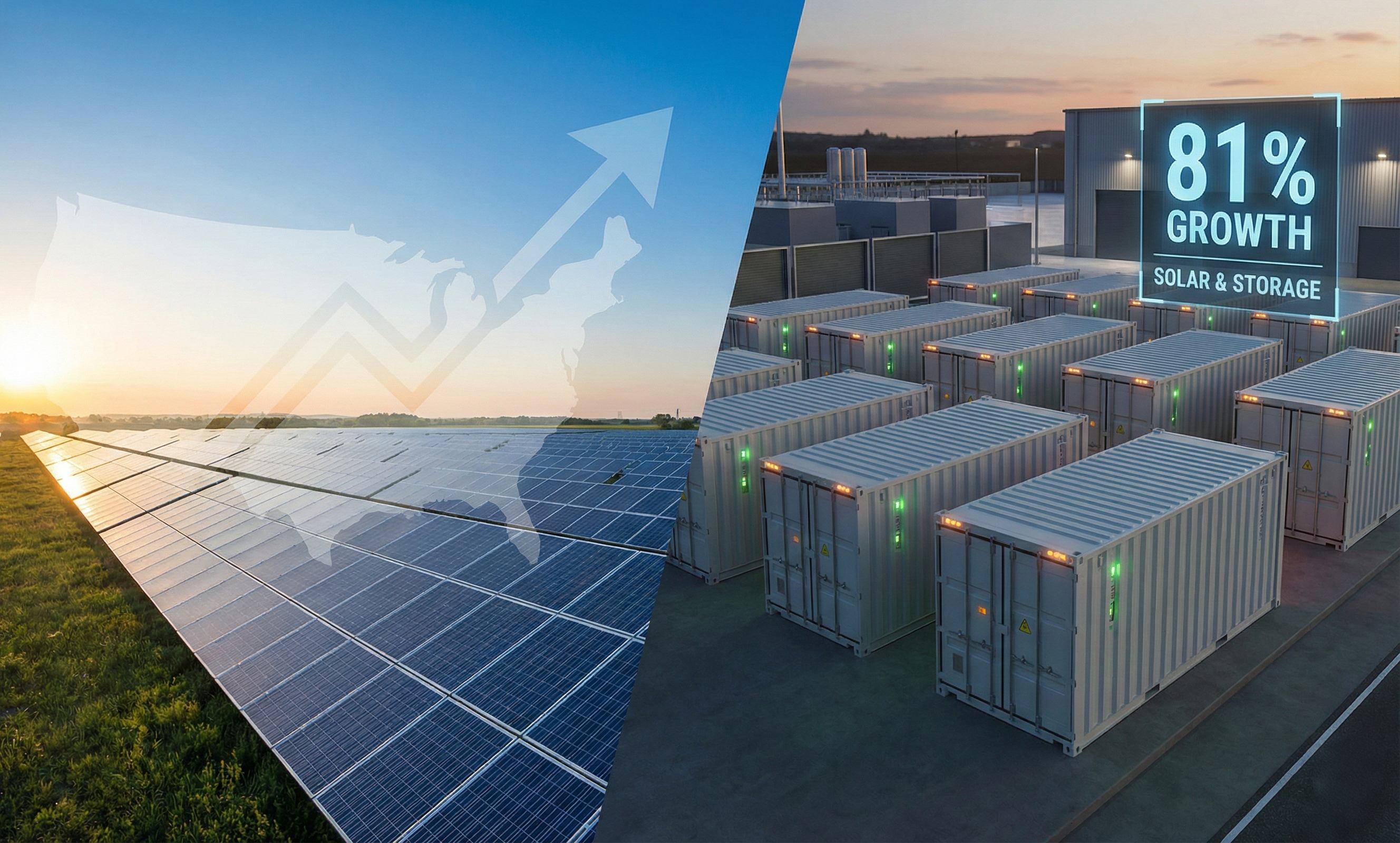 Solar and Batteries Claim 81% of U.S. Power Growth in 2025: Infrastructure Implications for Public Lighting
  Solar & Wind Street Lights vs. Incandescent Grid Lighting: Why Renewable Street Lighting Is the Future
  “All Energy Generation Will Be Solar” – Elon Musk’s Warning on Clean Energy, Solar Power, and Green Energy
 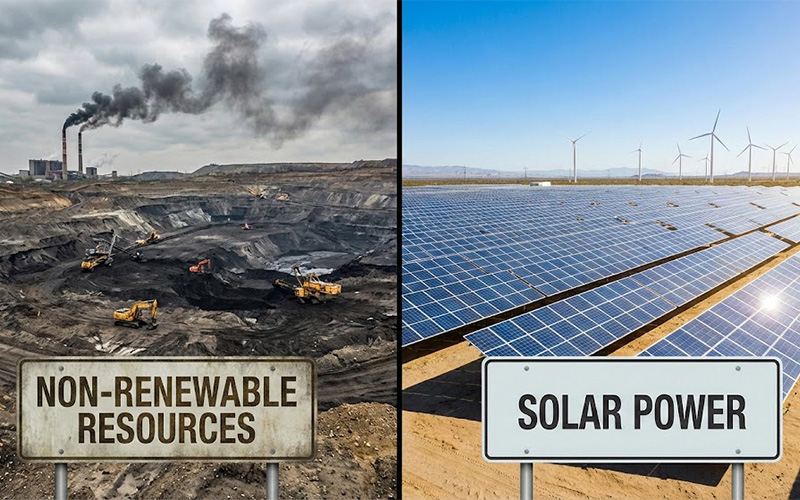 Is Solar Energy Renewable or Nonrenewable? Non-Renewable Resources vs Solar Power: Why Solar Energy Systems (a Renewable Resource) Are Replacing Fossil-Fuel Lighting
  Why Smart Street Lights Deliver the Highest ROI in Modern Smart City Technology?
 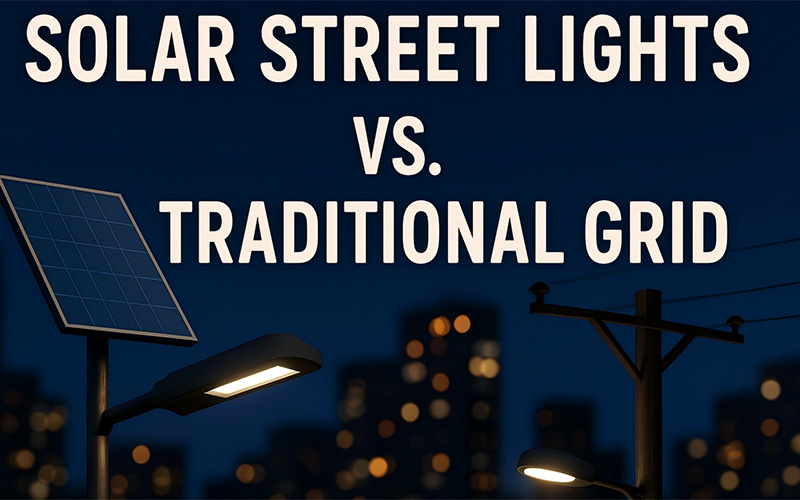 Solar Street Lights vs. Traditional Grid: The Real Cost Breakdown
  How to Choose the Best Smart Solar Street Light to Prevent Street Light Outages?
  The Solar Street Light Industry in 2024-2025: Innovations, Trends, and Leading Brands
  A Solar Street Light Lamp Illuminates the Road to Rural Revitalization
  The Ultimate Instruction Of LED Solar Street Light: How it works and how to maintain
  Solar Street Light Assist To The Net-Zero Future
  Cheap Solar Equipment Is Much Of Which Turns Into E-Waste
  Solar Energy - Concept, Utilization, Advantages, & Launched Projects
  Reduce Energy Consumption Per Unit Of GDP Through Utilize Solar Energy On Outdoor Illumination
  Pull Into Hybrid Wind-Solar Sustainable Energy For Electricity Generation
  Breaking News: Residents Turns To Solar As Antidote
  Philippine Department of Public Works Develops Standard Design for Solar Lanterns on National Roads