
“All Energy Generation Will Be Solar” – Elon Musk’s Warning on Clean Energy, Solar Power, and Green Energy
author: Aurora
2025-12-10







Elon Musk’s Solar Energy Warning: “All Energy Generation Will Be Solar” — What It Means for the Future of Power, Technology, and Solar Street Lighting
The energy landscape is defined by bold predictions, but few resonate with the disruptive potential of Elon Musk's declaration: "All energy generation will be solar." This statement, frequently resurfacing in solar energy news and tech publications, goes beyond simple optimism. It is a calculated forecast rooted in exponential technological progress and fundamental physics.
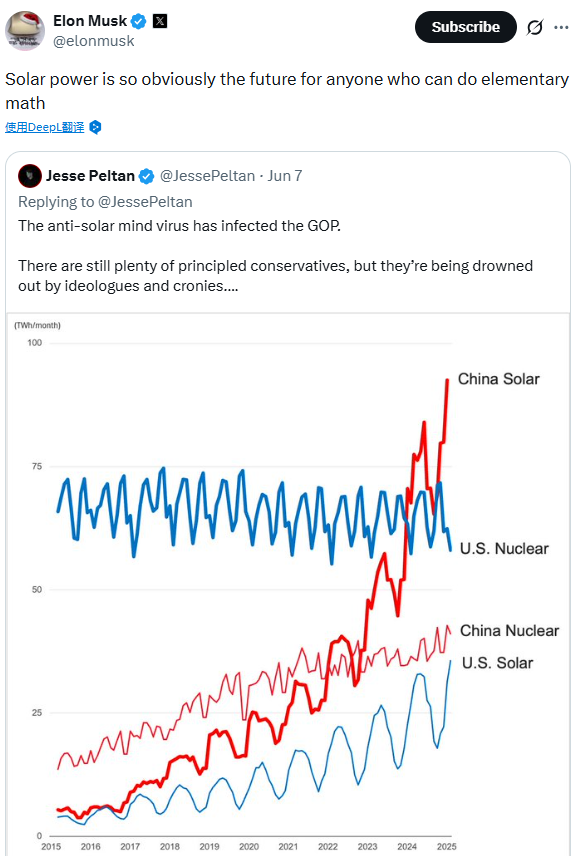
Data shows a rapidly increasing global interest in keywords like solar panel, solar power, energy, battery, and solar light. The core thesis is clear: solar energy efficiency is increasing rapidly, solar power utilization is expanding across industries, and the widespread adoption of solar energy street lights provides the earliest, most tangible proof of this coming transformation.
Elon Musk's "solar energy warnings" focus on the urgent need for a global shift to renewables, highlighting China's massive solar expansion as a wake-up call for the U.S. and the world to accelerate adoption to meet future energy demands, especially for AI.
Why Elon Musk Believes Solar Energy Will Dominate Global Power Generation?
- The Physics Argument: Ultimate Energy Abundance
The sun bombards the Earth with approximately 173,000 terawatts of energy—more energy in one hour than humanity consumes globally in a year. For Musk, the question is not about resource scarcity, but about overcoming infrastructure constraints to capture and utilize this ultimate renewable resource.
- The Technological Argument: Advancements in Energy Solar Tech
The solar industry is defined by the exponential improvement of energy solar tech.
Efficiency Growth: Traditional silicon solar cells (monocrystalline, PERC, TOPCon) have consistently pushed past the 20% efficiency mark, with research in tandem solar cells and perovskite technology hinting at a practical limit of over 30%.
Intelligent Solar Systems: Solar inverters are becoming complex, intelligent management systems, optimizing power conversion and integrating seamlessly with battery storage.
Cheaper Energy Storage: The relentless focus on reducing battery costs and improving longer battery cycles is the key to solving the intermittency challenge.
- The Economic Argument: Solar's Cost Advantage
In many regions, utility-scale solar is already the cheapest new energy source—surpassing coal and natural gas without subsidies. The declining cost curve of PV modules makes the upfront cost of solar power installations increasingly competitive, guaranteeing lower operational costs over a 25+ year lifespan.
- The Global Adoption Argument:
Solar is not just a Western phenomenon; its adoption is accelerating rapidly in Europe, Asia, and Africa. For developing regions, decentralized solar solutions, particularly solar lighting, offer a fast track to electrification, bypassing the need for expensive, centralized fossil fuel infrastructure.
Solar Power Utilization: From Rooftops to Public Infrastructure Lighting
Residential Solar: Homeowners are pairing rooftop systems with battery backup (like the Tesla Powerwall) to achieve true energy independence, reducing reliance on the grid and replacing traditional diesel generators.
Commercial and Industrial (C&I) Solar: Factories, logistics centers, and large commercial buildings are deploying massive on-site solar arrays to secure long-term, stable energy costs and enhance energy security.
Public Infrastructure: This is where the decentralized vision takes shape. Solar energy street lights are the perfect early-stage example of solar replacing obsolete, fossil-fuel-based systems. They offer quick deployment, off-grid reliability, eliminate costly trenching and wiring, and reduce long-term municipal maintenance expenses.
Solar Street Lights: The Practical Proof of Musk’s Prediction
Solar energy street lights are a crucial component of the future energy landscape, serving as a real-world, scalable, and decentralized power solution.
- Why Solar Street Lights Matter?
They are the ultimate off-grid application. In urban areas, they cut electricity costs and support smart city development by acting as independent, low-voltage power hubs. In rural areas or regions with unstable power grids, they provide reliable safety and security that conventional grid-dependent lighting cannot guarantee.
- Technology Behind Solar Street Lights
- High-Efficiency Solar Panels: Optimized PV cells capture maximum energy from a limited surface area.
- Smart Pro-Double MPPT Solar Charge Controllers: These systems maximize power harvesting by dynamically adjusting electrical load.
- LiFePO₄ Batteries: Lithium Iron Phosphate chemistry provides the long lifespan and high cycle count necessary for reliable daily charge/discharge. BOSUN ultra-low temperature battery for extremely cold environments.
- LED Optical Performance: Highly efficient LED street lights require minimal energy, extending the battery runtime.
This decentralized power infrastructure serves as a model for how solar energy can be deployed everywhere, one light pole at a time.


Solar Energy Efficiency: The Science Behind Rapid Improvements
What Determines Solar Energy Efficiency?
Efficiency, the percentage of sunlight converted to electricity, is governed by several factors:
PV Cell Materials: The purity and structure of the silicon or other semiconductor material.
Temperature Coefficient: The panel's ability to maintain performance in high temperatures.
Emerging Tech: Innovations like tandem cells, which stack two different materials to capture a wider spectrum of light, are pushing past traditional limits.
Efficiency Milestones
The industry is rapidly progressing from 15% to commercial 22% efficiency modules. Innovations in perovskite solar cells, which are cheap to manufacture and theoretically boast high efficiency, are the next frontier. Higher efficiency means more power output from smaller panels, making urban and space-constrained installations feasible and lowering installation costs globally.
Efficiency, the percentage of sunlight converted to electricity, is governed by several factors:
PV Cell Materials: The purity and structure of the silicon or other semiconductor material.
Temperature Coefficient: The panel's ability to maintain performance in high temperatures.
Emerging Tech: Innovations like tandem cells, which stack two different materials to capture a wider spectrum of light, are pushing past traditional limits.
Efficiency Milestones
The industry is rapidly progressing from 15% to commercial 22% efficiency modules. Innovations in perovskite solar cells, which are cheap to manufacture and theoretically boast high efficiency, are the next frontier. Higher efficiency means more power output from smaller panels, making urban and space-constrained installations feasible and lowering installation costs globally.
The Drawbacks of Solar Energy: What Still Limits Universal Adoption
Despite the advancements, solar power is like a double-edged sword; a balanced analysis must address the drawbacks of solar energy. These form the core of the pros and cons of solar energy debate.Despite the advancements, a balanced analysis must address the drawbacks of solar energy. These form the core of the pros and cons of solar energy debate.
- Intermittency
The most significant constraint: solar only produces energy during daylight hours. This demands a non-solar energy source or, more practically, robust storage.
- Energy Storage Limitations
The Achilles' heel of solar is the battery cost, limited capacity, and finite lifespan. While costs are dropping, large-scale, cost-effective storage for multi-day periods remains a major challenge.
- Space and Environmental Requirements
Utility-scale solar farms require vast stretches of land. Furthermore, the environmental considerations of material sourcing (lithium, rare earth minerals) and end-of-life solar panel recycling must be addressed for truly sustainable universal adoption.
- Weather Dependency
Battery Storage: The Missing Link Between Musk’s Vision and Today’s Reality
Innovation in battery technology is the indispensable bridge between solar's potential and its universal reality.
A. The Crucial Role of Battery Innovation
Storage is what transforms intermittent solar power into dispatchable, 24/7 power.
Storage is what transforms intermittent solar power into dispatchable, 24/7 power.
B. Storage Systems Used Today
The market is dominated by Lithium-ion and the safer, longer-lasting LiFePO₄ battery. Grid-scale solutions like the Tesla Megapack are proving the commercial viability of storing massive amounts of energy to balance the grid.
The market is dominated by Lithium-ion and the safer, longer-lasting LiFePO₄ battery. Grid-scale solutions like the Tesla Megapack are proving the commercial viability of storing massive amounts of energy to balance the grid.
C. Role of Batteries in Solar Street Lights
In a solar energy street light, the battery ensures essential operation at night, provides weather resilience, and is managed by smart controllers for optimal charge/discharge cycles, maximizing system longevity. Improvements in battery density and cost will directly accelerate full solar adoption across all applications.
In a solar energy street light, the battery ensures essential operation at night, provides weather resilience, and is managed by smart controllers for optimal charge/discharge cycles, maximizing system longevity. Improvements in battery density and cost will directly accelerate full solar adoption across all applications.
Solar Panel Manufacturing and Technology Trends
Manufacturing Scale: Global production capacity for Mono- and Thin-film solar is skyrocketing, forcing down prices and increasing availability of every solar panel and solar light.
Supporting Facts: Solar panel energy facts show lifespans increasing to over 30 years and resilience improving against harsh weather.
Emerging Innovations: Bifacial panels capture light from both sides, increasing output. Transparent solar panels offer the potential to turn every window into a power generator, radically expanding the surface area for energy harvesting.
Supporting Facts: Solar panel energy facts show lifespans increasing to over 30 years and resilience improving against harsh weather.
Emerging Innovations: Bifacial panels capture light from both sides, increasing output. Transparent solar panels offer the potential to turn every window into a power generator, radically expanding the surface area for energy harvesting.
The Likely Future: Hybrid Solar+ Wind Renewable Energy
The most probable scenario is a hybrid renewable energy system: Solar + Wind, optimized by Solar + Battery, and potentially backed by green hydrogen for seasonal storage. This will lead to decentralized microgrids coexisting with, and eventually replacing, centralized fossil fuel grids.
Solar is advancing faster than any other renewable source. Battery innovation is the critical tipping point that will unlock its potential. While pure solar may not capture every single watt of energy generation, it will not only supplement but is poised to eventually replace the vast majority of global electricity generation. For governments, businesses, and households, the message is to invest in this future, as the cost, efficiency, and reliability of solar power are making it the inevitable choice.
Solar Energy & Street Lights FAQ
What is Elon Musk's claim about solar energy?
Elon Musk has stated that "essentially all energy generation will be solar," emphasizing that the sun provides enormous energy and that technological advancements in panels and batteries make its dominance inevitable.
What are the biggest drawbacks of solar energy?
The primary drawbacks of solar energy are intermittency (it only produces power when the sun shines) and the current cost/capacity limitations of energy storage (batteries) required to store power for nighttime use.
The primary drawbacks of solar energy are intermittency (it only produces power when the sun shines) and the current cost/capacity limitations of energy storage (batteries) required to store power for nighttime use.
How efficient are solar panels today?
Commercial solar panel efficiency for high-end residential and commercial use is typically over $22\%$, with cutting-edge research in tandem and perovskite cells aiming for practical efficiencies above 30%.
Commercial solar panel efficiency for high-end residential and commercial use is typically over $22\%$, with cutting-edge research in tandem and perovskite cells aiming for practical efficiencies above 30%.
Why are solar energy street lights a key technology?
Solar energy street lights are a crucial early demonstration because they operate completely off-grid, eliminating trenching/wiring costs, providing reliable light even during power outages, and significantly reducing municipal electricity bills.
Solar energy street lights are a crucial early demonstration because they operate completely off-grid, eliminating trenching/wiring costs, providing reliable light even during power outages, and significantly reducing municipal electricity bills.
Is the battery used in a solar street light the same as a car battery?
No. Modern commercial solar street lights primarily use LiFePO₄ (Lithium Iron Phosphate) batteries, which are optimized for long life (many charge/discharge cycles) and safety, unlike car batteries designed for high-power bursts.
 A Preview of the 2026 Barcelona Smart City Exhibition: Why Multi-Functional Smart Poles Are Emerging as a New Urban Standard?
 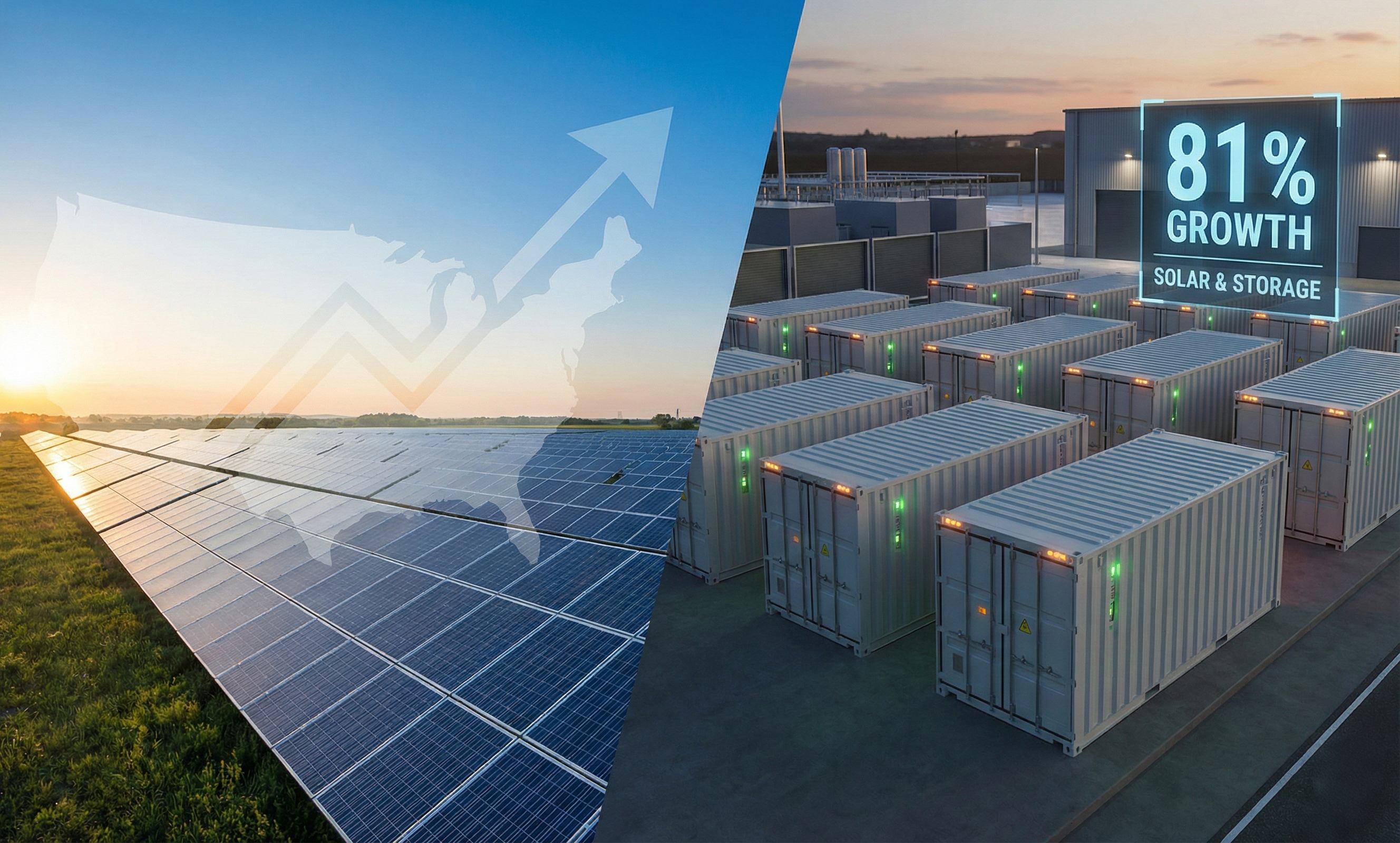 Solar and Batteries Claim 81% of U.S. Power Growth in 2025: Infrastructure Implications for Public Lighting
  Solar & Wind Street Lights vs. Incandescent Grid Lighting: Why Renewable Street Lighting Is the Future
 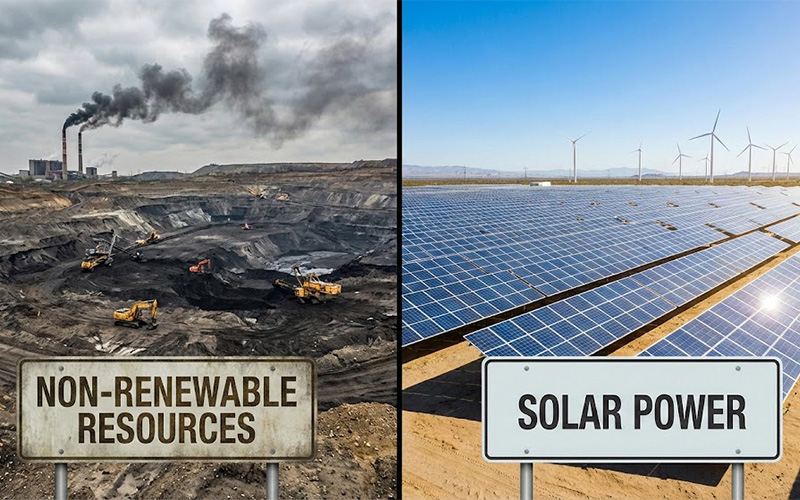 Is Solar Energy Renewable or Nonrenewable? Non-Renewable Resources vs Solar Power: Why Solar Energy Systems (a Renewable Resource) Are Replacing Fossil-Fuel Lighting
  Why Smart Street Lights Deliver the Highest ROI in Modern Smart City Technology?
  Solar Street Lights vs. Traditional Grid: The Real Cost Breakdown
  How to Choose the Best Smart Solar Street Light to Prevent Street Light Outages?
  Solar Street Lights – Farolas Solares Inteligentes: Long-Term Development, Sustainability, Smart Upgrades, and Economic Benefits for Modern Cities
  The Solar Street Light Industry in 2024-2025: Innovations, Trends, and Leading Brands
  A Solar Street Light Lamp Illuminates the Road to Rural Revitalization
  The Ultimate Instruction Of LED Solar Street Light: How it works and how to maintain
  Solar Street Light Assist To The Net-Zero Future
  Cheap Solar Equipment Is Much Of Which Turns Into E-Waste
  Solar Energy - Concept, Utilization, Advantages, & Launched Projects
  Reduce Energy Consumption Per Unit Of GDP Through Utilize Solar Energy On Outdoor Illumination
  Pull Into Hybrid Wind-Solar Sustainable Energy For Electricity Generation
  Breaking News: Residents Turns To Solar As Antidote
  Philippine Department of Public Works Develops Standard Design for Solar Lanterns on National Roads