
Is Solar Energy Renewable or Nonrenewable? Non-Renewable Resources vs Solar Power: Why Solar Energy Systems (a Renewable Resource) Are Replacing Fossil-Fuel Lighting
author: Aurora
2025-12-09







Understanding Non-Renewable Resources and the Rise of Solar Power: A Professional Insight into Future Energy Systems
Solar power has become the engine of the global energy transition, with both solar generation, capacity, and portable solar power generator installations setting new records in 2024. Solar and wind boom pushes world past 40% clean electricity in 2024 according to Global Electricity Review 2025.
In the evolving global energy landscape, a critical distinction separates the finite from the inexhaustible: non-renewable resources and renewable resources examples. Non-renewable sources, the historical backbone of industrial economies, are now challenged by the burgeoning power of the sun—a move that is not just environmentally necessary but financially and operationally advantageous. A professional insight demands a decisive pivot to sustainable solutions like solar power, exemplified by applications such as solar energy street lights.
This trend reflects a collective desire to understand why fossil fuels are limited, how to transition toward sustainable power, and how technologies such as solar power, off-grid solar power systems, and solar energy street lights offer practical pathways to clean energy independence.

What Are Non-Renewable Resources?
Non-renewable resources are natural materials that cannot regenerate within a human lifespan or are consumed much faster than nature can replenish them. Once depleted, they are effectively gone permanently.
A resource is considered non-renewable if it meets the following conditions:
1. It forms extremely slowly
Non-renewable materials require millions of years of geological processes to form such as coal, petroleum (crude oil), natural gas, minerals such as copper, gold, silver.
Non-renewable materials require millions of years of geological processes to form such as coal, petroleum (crude oil), natural gas, minerals such as copper, gold, silver.
2. It is extracted faster than nature can replace it
Fossil fuels took millions of years to form, but modern industry consumes them in mere decades. This is why they are classified as non-renewable.
3. It becomes permanently unavailable once consumed
Unlike solar energy or wind, fossil fuels do not regenerate. Their depletion creates scarcity, higher extraction costs, and volatile global pricing.
4. It contributes to environmental degradation
Non-renewable resources typically come with impacts such as:
Non-renewable resources typically come with impacts such as:
- CO₂ emissions
- Mining waste
- Soil degradation
- Water contamination
- Air pollution
Understanding Non-Renewable Resources
How to Identify Non-Renewable Resources
Identifying a non-renewable resource fundamentally comes down to assessing its rate of replenishment versus its rate of consumption.
Identifying a non-renewable resource fundamentally comes down to assessing its rate of replenishment versus its rate of consumption.
Fossil Fuels: These are the most prominent examples (non renewable resources and renewable resources examples). They include coal, petroleum (oil), and natural gas, formed from the buried, decayed remains of ancient plants and animals over millions of years under immense heat and pressure. The fundamental question, why do we call fossil fuels non renewable resources, is answered by this geological timescale—they are being consumed exponentially faster than nature can create them.
Minerals and Metal Ores: While the metals themselves are abundant in the Earth's crust, the concentrated deposits that are economically viable to extract are not quickly replenished. This addresses the common query: true or false: minerals are a non-renewable resource? The answer is true, as their localized, usable deposits are finite on a human timeline.
Nuclear Fuels: Uranium, though capable of sustaining a long-term reaction through breeder reactor technology, is extracted as a finite mineral resource.
Conversely, renewable resources, like solar energy, wind energy, and the continuous cycle of water, are constantly being replenished. A nuanced resource is water: is water renewable or non renewable resource? Surface water is generally renewable through the hydrological cycle, but deeply buried "fossil water" or severely over-exploited groundwater aquifers are considered non-renewable due to the slow recharge rate.
Consequences of Relying on Non-Renewable Energy

Economic Volatility
Oil and gas prices fluctuate dramatically due to geopolitical conflict and supply limitations.
Oil and gas prices fluctuate dramatically due to geopolitical conflict and supply limitations.
Finite Supply
Extraction becomes more expensive as easier deposits are exhausted.
Extraction becomes more expensive as easier deposits are exhausted.
Carbon Emissions
Non-renewables are the leading cause of greenhouse gases.
Non-renewables are the leading cause of greenhouse gases.
High Infrastructure Costs
Mining, pipelines, refineries, and distribution networks require enormous investment.
Mining, pipelines, refineries, and distribution networks require enormous investment.
Environmental Risk
Spills, land destruction, and air pollution create long-term ecological damage.
Spills, land destruction, and air pollution create long-term ecological damage.
The Strategic Advantages of Solar Power
While non renewable energy resources advantages disadvantages often cite low initial cost and high energy density (advantages) alongside pollution, price volatility, and ultimate depletion (disadvantages), solar power presents a compelling, long-term strategic alternative. The facts about solar energy, or solar energy facts, highlight its inherent sustainability and operational benefits:
1. Environmental and Supply Security
Solar power is the cleanest and most abundant renewable energy source available. It offers energy independence by utilizing an inexhaustible, decentralized resource—the sun. This eliminates the geopolitical risks and price instability associated with global fossil fuel markets. Urban solar lighting design is going viral, cost-effective, and eco-friendly, maximally reducing government expenditure.
Solar power is the cleanest and most abundant renewable energy source available. It offers energy independence by utilizing an inexhaustible, decentralized resource—the sun. This eliminates the geopolitical risks and price instability associated with global fossil fuel markets. Urban solar lighting design is going viral, cost-effective, and eco-friendly, maximally reducing government expenditure.
2. Future-Ready and Diverse Applications
The versatility of solar power is a major differentiator. Solar technology can be scaled from industrial utility systems down to consumer-level applications:
Off Grid Solar Power Systems: These provide critical electrification to remote locations, eliminating the need for expensive grid infrastructure expansion.
Portable Solar Power Generator: These offer reliable, quiet backup power for emergencies, camping, or job sites, directly replacing polluting, noisy combustion engines.
MPPT Solar Power Charge Controller and Solar and Power Inverter: These essential components manage the flow of electricity, efficiently converting the sun's DC power into usable AC power for homes and businesses (generator and solar power pairing is becoming obsolete in favor of battery storage). The decreasing upfront cost is also making the question of how many solar panels to power a house increasingly feasible for the average homeowner.
3. Exemplary BOSUN Case Study: Solar Energy Street Lights
The use of solar energy street lights is a perfect microcosm of solar power's advantages.
The use of solar energy street lights is a perfect microcosm of solar power's advantages.
Zero Wiring & Easy Installation: They operate autonomously, making installation simple and cost-effective, particularly in new developments or remote areas.
Reduced Operational Costs: Since they are powered entirely by the sun, they eliminate the electricity bills and trenching costs associated with traditional lighting.
Grid Independence: As self-sufficient units, they provide reliable illumination even during grid-wide power outages, enhancing public safety and security. Get Instant Quote Right Now!
How does solar power work?

How Solar-Powered Street Lights Replace Traditional Grid Lighting That Depends on Non-Renewable Resources
Solar street lights are not just an upgrade—they are a structural shift in how cities, towns, and industrial sites illuminate public spaces. Instead of relying on grid electricity generated from non-renewable resources such as coal, natural gas, or petroleum, solar street lights generate their own clean electricity directly from the sun.
- Solar Street Lights Produce Their Own Electricity (No Fossil Fuels Needed)
- Each Pole Operates Independently—No Grid Wiring Required
- Solar Street Lights Reduce Carbon Emissions Immediately
- Lower Operating Costs Encourage Faster Transition
- Solar Technology Works Even in Rural or Remote Locations
- Smart Solar Street Lights Maximize Energy Efficiency
- Solar Replaces Grid Lighting Without Infrastructure Overhaul
- Solar Street Lights Support Renewable Energy Policy Targets
- Solar Street Lights Overcome Grid Limitations
Economic, Environmental, and Operational Summary
| Category | Grid Lighting (Non-Renewable) | Solar Street Lighting (Renewable) |
|---|---|---|
| Energy Source | Coal, gas, oil | Sunlight |
| Cost | Monthly electricity bills | Zero electricity |
| Infrastructure | Heavy & costly | Minimal |
| CO₂ Emissions | High | Zero operation emissions |
| Maintenance | Frequent | Low |
| Resilience | Depends on grid | Independent |
| Sustainability | Low | High |
The transition from a dependency on finite non-renewable resources to abundant solar power is the defining economic and environmental challenge of our time. By understanding how solar power works—converting sunlight directly into electricity via photovoltaic cells—and embracing the technological ecosystem that supports it - from the solar and power inverter to the simple, effective solar energy street lights, we move towards a more resilient, sustainable, and cleaner energy future. This is no longer an idealistic choice but a sound, professional investment in infrastructure and planetary health.
BOSUN Solar Street Light Engineering Project - Revitalize villages and Shed Light With Sustainable Energy Lighting


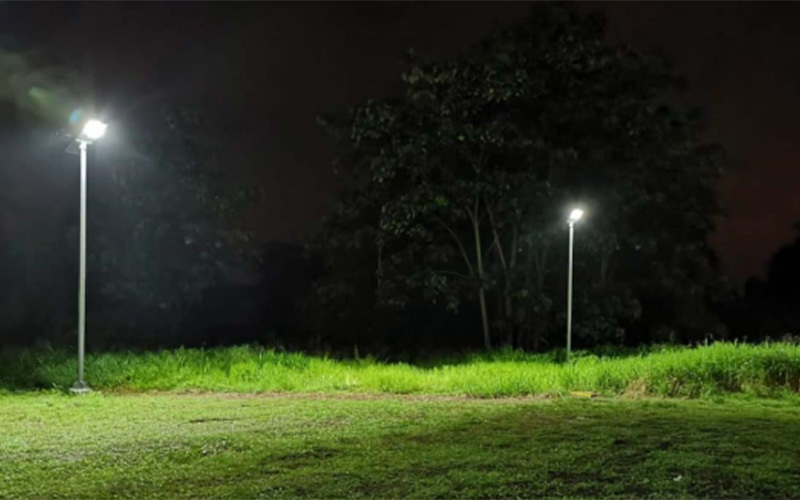
In a remote village in the Philippines, nighttime darkness posed a significant challenge for residents. Limited outdoor street lighting led to safety concerns for pedestrians and vehicles, particularly on winding roads and key community pathways. This issue has caught the attention of the relevant authorities. BOSUN's automatically self-cleaning street solar light solves the village road illumination in the Philippines.
FAQs About Non-Renewable Resources and Solar Power
Why do we call fossil fuels non-renewable resources?
Fossil fuels—such as coal, oil, and natural gas—are classified as non-renewable resources because they take millions of years to form from ancient plant and animal matter. Humans consume these fuels far faster than nature can replenish them. Once depleted, they cannot be replaced within any meaningful human timescale.
Fossil fuels—such as coal, oil, and natural gas—are classified as non-renewable resources because they take millions of years to form from ancient plant and animal matter. Humans consume these fuels far faster than nature can replenish them. Once depleted, they cannot be replaced within any meaningful human timescale.
Is water renewable or non-renewable resource?
Water is generally considered a renewable resource because it is naturally recycled through the hydrological (water) cycle—evaporation, condensation, and precipitation replenish water supplies continuously.
However, water can become locally scarce if overused or contaminated faster than natural systems can restore it.
However, water can become locally scarce if overused or contaminated faster than natural systems can restore it.
Minerals are a non-renewable resource.
Minerals such as copper, gold, iron, zinc, and rare earth elements are non-renewable because they form very slowly over geological time, exist in finite quantities, and cannot be regenerated after extraction. Once mined and used, minerals do not naturally reform within human lifespans.
Minerals such as copper, gold, iron, zinc, and rare earth elements are non-renewable because they form very slowly over geological time, exist in finite quantities, and cannot be regenerated after extraction. Once mined and used, minerals do not naturally reform within human lifespans.
Hot-Selling Solar Power Street Lights


 A Preview of the 2026 Barcelona Smart City Exhibition: Why Multi-Functional Smart Poles Are Emerging as a New Urban Standard?
 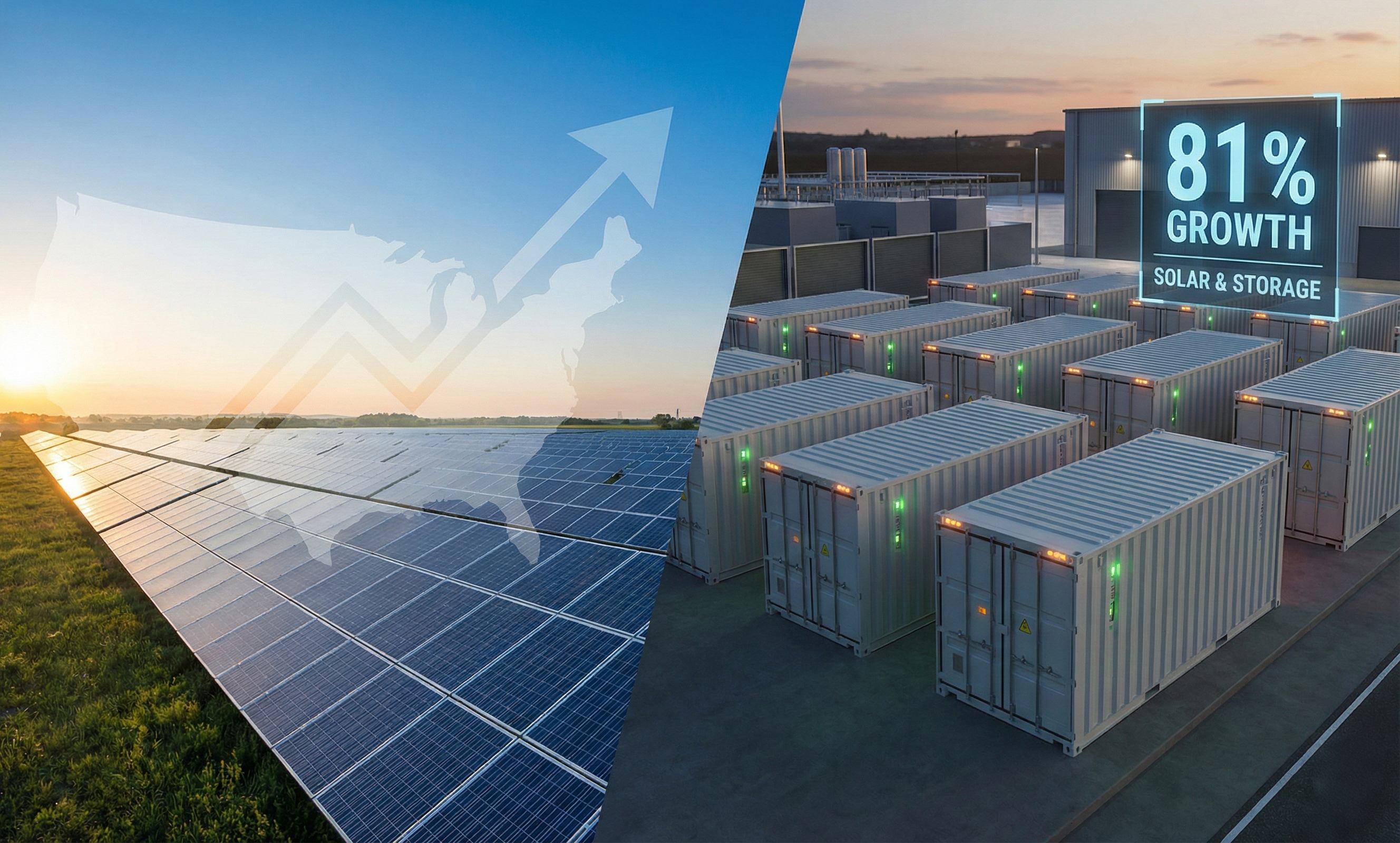 Solar and Batteries Claim 81% of U.S. Power Growth in 2025: Infrastructure Implications for Public Lighting
  Solar & Wind Street Lights vs. Incandescent Grid Lighting: Why Renewable Street Lighting Is the Future
  “All Energy Generation Will Be Solar” – Elon Musk’s Warning on Clean Energy, Solar Power, and Green Energy
  Why Smart Street Lights Deliver the Highest ROI in Modern Smart City Technology?
  Solar Street Lights vs. Traditional Grid: The Real Cost Breakdown
  How to Choose the Best Smart Solar Street Light to Prevent Street Light Outages?
  Solar Street Lights – Farolas Solares Inteligentes: Long-Term Development, Sustainability, Smart Upgrades, and Economic Benefits for Modern Cities
  The Solar Street Light Industry in 2024-2025: Innovations, Trends, and Leading Brands
 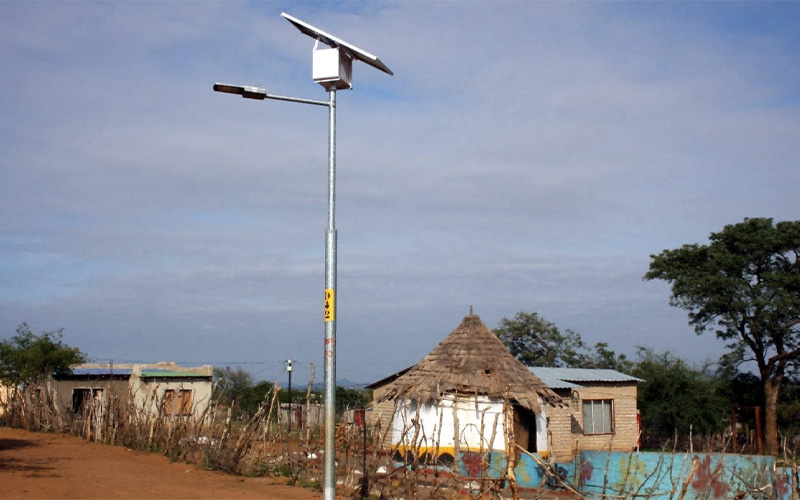 A Solar Street Light Lamp Illuminates the Road to Rural Revitalization
  The Ultimate Instruction Of LED Solar Street Light: How it works and how to maintain
  Solar Street Light Assist To The Net-Zero Future
  Cheap Solar Equipment Is Much Of Which Turns Into E-Waste
  Solar Energy - Concept, Utilization, Advantages, & Launched Projects
  Reduce Energy Consumption Per Unit Of GDP Through Utilize Solar Energy On Outdoor Illumination
  Pull Into Hybrid Wind-Solar Sustainable Energy For Electricity Generation
  Breaking News: Residents Turns To Solar As Antidote
  Philippine Department of Public Works Develops Standard Design for Solar Lanterns on National Roads