Solar Street Light Price in India: What You're Really Paying For
2026-01-27
When people search for solar street light price in India, they’re usually not asking for a simple “lamp tag price.”
They are budgeting a complete outdoor lighting system for roads, campuses, industrial parks, logistics zones, or off-grid infrastructure—where performance must hold through heat, dust, and monsoon seasons, and where maintenance cost can outweigh the initial purchase price.
In real engineering projects, solar street lighting is not a lamp purchase.
It is a coordinated system:
It is a coordinated system:
-
Lighting output (LED + optical distribution)
-
Energy management (Controller + operating profile)
-
Structural safety (pole, mounting, foundation, wind load)
This article explains how solar street light pricing in India is actually formed, what truly drives system cost, why low-price systems often fail in field conditions, and how to evaluate a “best solar street light in India” decision using configuration logic—not marketing claims.
The Thesis: There Is No Single “Solar Street Light Price” — Only Configuration Cost
A fixed “solar street light price in India” rarely exists in a meaningful way for road projects. What exists is a configuration cost based on the target application and the energy/lighting design choices.
You can think of project pricing as:
System Hardware + Pole & Civil Works + Installation + Commissioning + Warranty/O&M Scope
This is why two products both labeled “100W solar street light” can differ massively in:
-
brightness at ground
-
runtime stability in cloudy/rainy days
-
maintenance frequency
-
total cost of ownership over the project lifecycle
How Solar Street Light Price in India Is Actually Calculated
In engineering practice, pricing is determined by five core modules:
| System Module | Engineering Meaning | What It Changes in Price |
|---|---|---|
| Solar Panel System | Daily energy generation capacity | panel wattage, efficiency class, module quality, mounting |
| Battery System | Storage + backup days (autonomy) | chemistry, capacity, thermal stability, cycle life |
| LED Lighting System | Illumination performance on the road | lumen output, optics, efficiency, driver quality |
| Control System | Energy management efficiency | MPPT vs other logic, dimming profile, protection features |
| Structure System | Pole, housing, installation | wind resistance, foundation, mounting stability, corrosion protection |
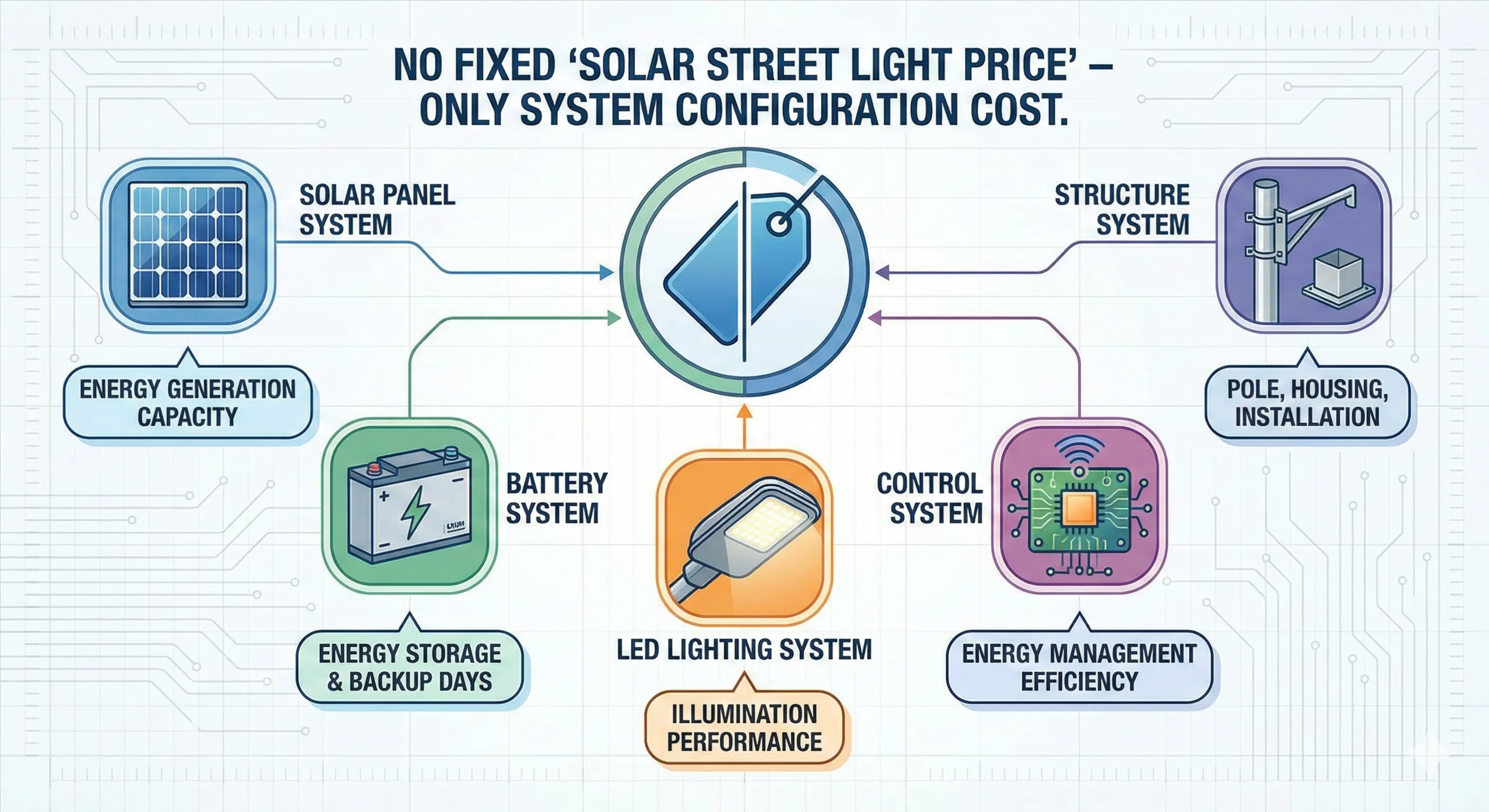
Key point: “Wattage” is not a system spec. It’s only a partial label.
Engineering pricing is built from target illumination + energy budget + autonomy + structural safety.
Engineering pricing is built from target illumination + energy budget + autonomy + structural safety.
What Drives Cost the Most
If you want a fast, realistic budget estimate, these are the variables that move your price range the most:
-
Required illumination outcome (road class, safety requirements, optics)
-
Operating profile per night (hours + dimming schedule)
-
Autonomy requirement (backup days for cloudy/monsoon periods)
-
Solar resource & climate (site region, dust, heat, shading risk)
-
Pole & civil foundation scope (new pole vs retrofit; wind load; soil conditions)
-
Warranty & service scope (what is included, response time, spares plan)
A “low upfront price” often means one or more of these were quietly under-designed.
Why Low-Price Solar Street Lights Fail in Real Projects
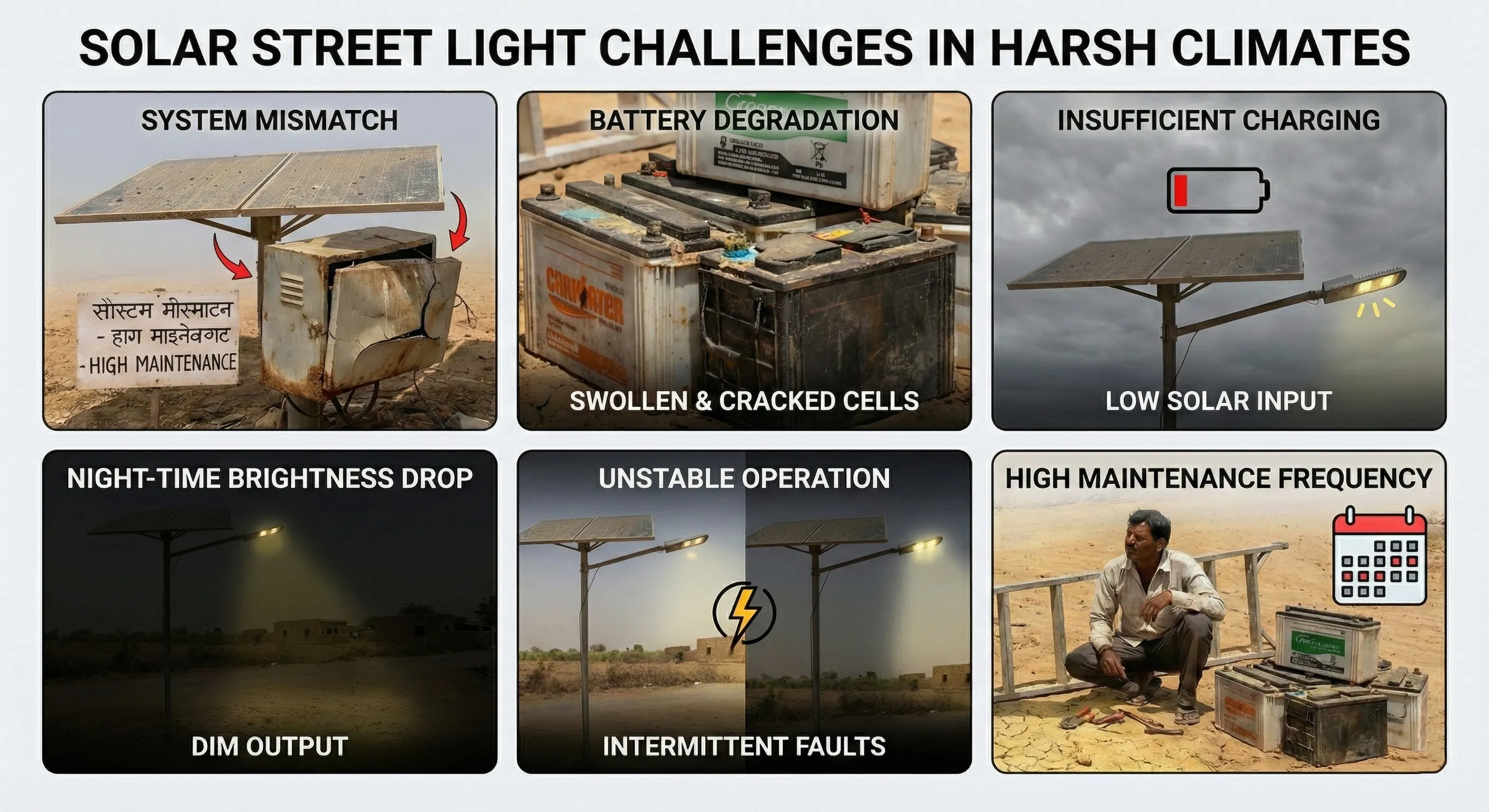
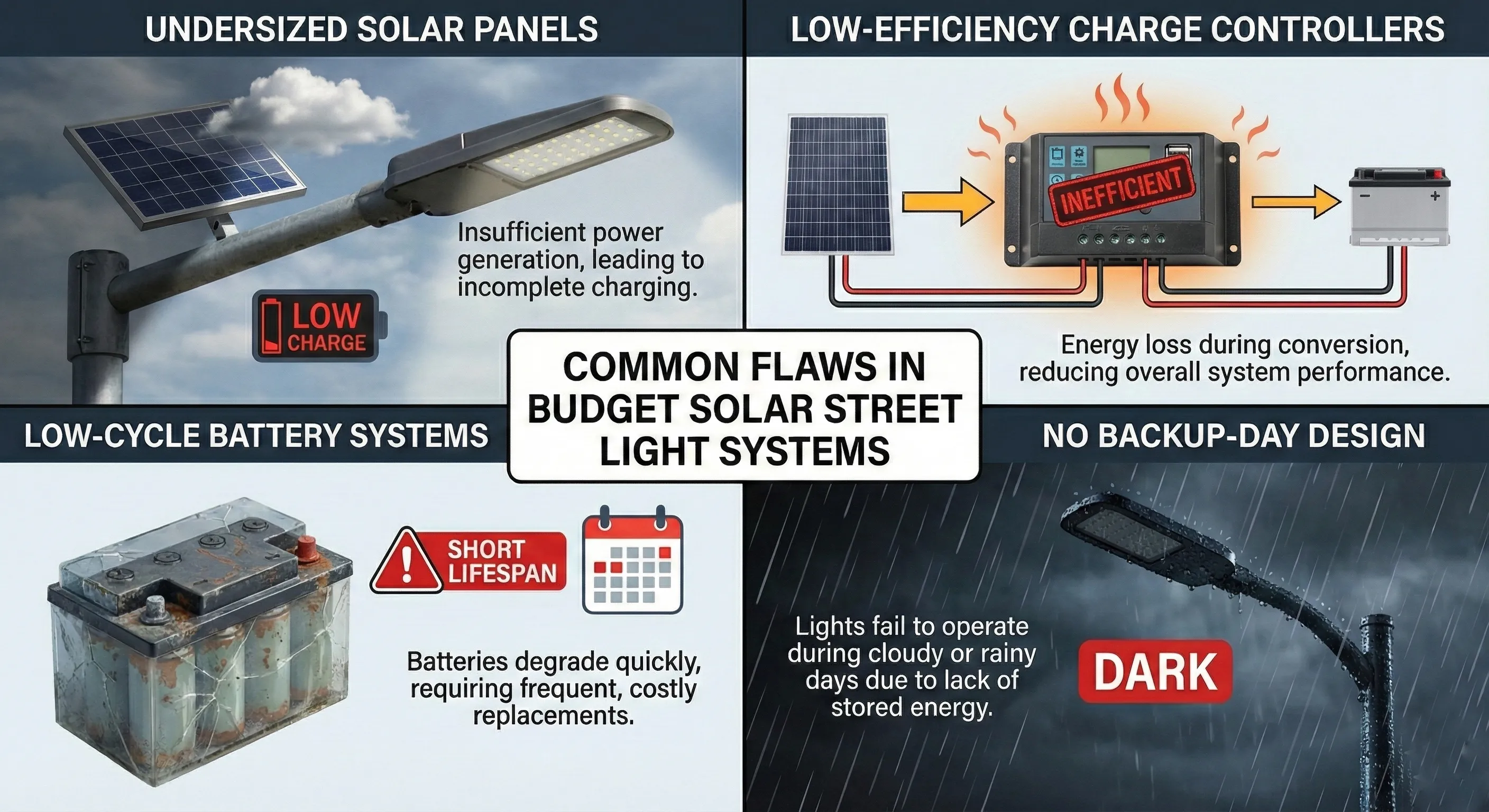
In many outdoor road projects, early failures are frequently linked to system under-configuration or mismatch (panel/battery/controller/profile), rather than a single component defect.
Under typical Indian outdoor conditions—high temperature, dust, and monsoon season variability—a mismatch can show up as:
-
battery degradation accelerating (heat + deep discharge patterns)
-
insufficient charging during cloudy weeks
-
brightness drop after midnight
-
unstable on/off behavior or protection trips
-
high maintenance frequency and complaints from stakeholders
From engineering review of common field issues, the repeated root causes are often:
-
undersized solar panels for the real load + real weather
-
charge controller without effective energy harvest logic
-
battery system chosen for price instead of cycle life + thermal stability
-
no autonomy design (no defined backup-day target)
-
dimming/operating profile not tuned to energy budget
If your goal is long-term stability, treat the purchase as an infrastructure system design, not a commodity lamp purchase.
India Road Lighting Reality: Use Familiar References, Then Engineer the Solar System Backwards
For road and public-thoroughfare lighting, India has established reference frameworks (for example, IS 1944 for lighting of public thoroughfares). Many tenders and municipal projects also reference government or institutional technical specifications for solar lighting systems, testing requirements, and documentation.
You don’t need to memorize every clause to buy correctly—but you do need a supplier who can:
-
translate the project requirement into lighting design logic
-
map that to an energy model
-
justify the system configuration in a way that matches tender evaluation
This is the difference between “a low quote” and “an approved, stable project delivery.”
The Engineering Solution Logic
Correct configuration matters more than brand slogans or wattage labels.
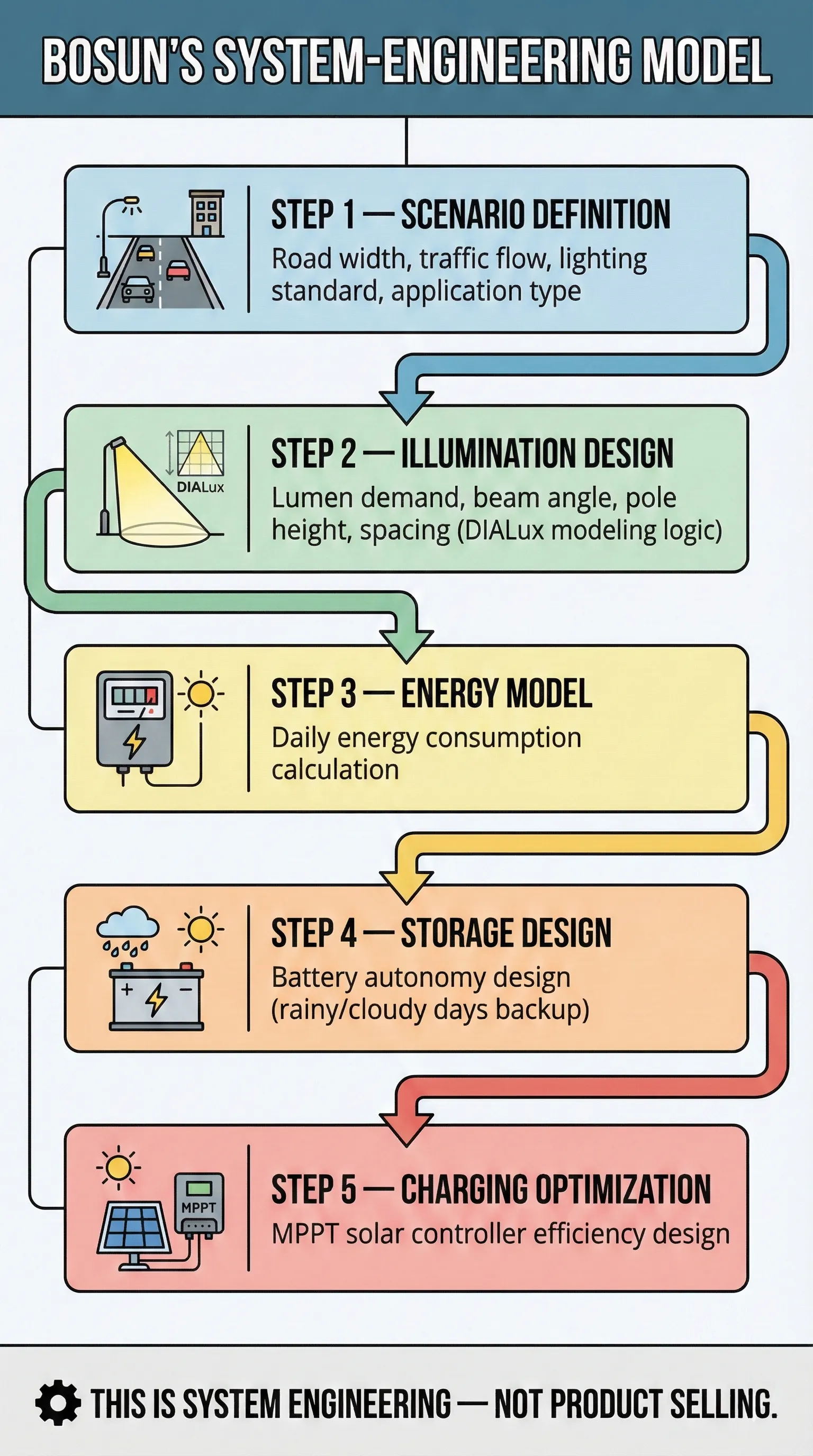
A defensible price quote needs a design chain that can be explained step-by-step.
A defensible price quote needs a design chain that can be explained step-by-step.
Step 1 — Scenario Definition
Define what you are lighting and why:
-
road type and width
-
traffic flow / pedestrian activity
-
application type (urban road, rural road, industrial park, campus, off-grid village)
-
local constraints (shading, dust exposure, wind risk, installation limitations)
Step 2 — Illumination Design (Optics + Geometry)
Translate “need light” into measurable design logic:
-
target illumination outcome
-
beam angle / optical distribution choice
-
pole height and spacing
-
mounting arm type
-
verification using lighting design methodology (e.g., DIALux modeling logic)
Step 3 — Energy Model (Daily Consumption)
Compute real daily load from:
-
LED power under operating profile (including dimming)
-
driver and system losses
-
working hours per night
-
seasonal considerations
Step 4 — Storage Design (Autonomy)
Define:
-
required backup days for cloudy/rainy periods
-
battery chemistry choice aligned to cycle life and thermal stability
-
depth-of-discharge strategy to protect lifecycle
Step 5 — Charging Optimization (Harvest + Protection)
Choose controller logic and protections that maintain stability:
-
energy harvest optimization (e.g., MPPT logic)
-
charge/discharge protections
-
temperature-related safety strategies
-
profile tuning (smart dimming options when required)
This is system engineering—not product selling.
What You Should Ask Any Supplier Before Accepting a “Solar Street Light Price in India” Quote
If a quote cannot answer these clearly, the “price” is not engineering-grade:
-
What illumination outcome is the configuration designed to achieve (and how is it validated)?
-
What operating profile is assumed (hours, dimming schedule)?
-
What autonomy target is designed (backup days) and what climate assumptions are used?
-
What battery chemistry and lifecycle logic is chosen—and why?
-
What controller logic is used for harvest optimization and protections?
-
What is included in pole + foundation + installation scope?
-
What documentation is provided to support tender evaluation (configuration sheet, design notes, testing reports if required)?
Product System Reference: BS-FY Series
To make the configuration logic concrete, here is a system reference model used for road and outdoor scenarios:
BS-FY Series Solar Street Light
//www.bosunlighting.com/bs-fy-solar-street-light-220lm-w-ultra-bright-sealed-panel-design.html
//www.bosunlighting.com/bs-fy-solar-street-light-220lm-w-ultra-bright-sealed-panel-design.html
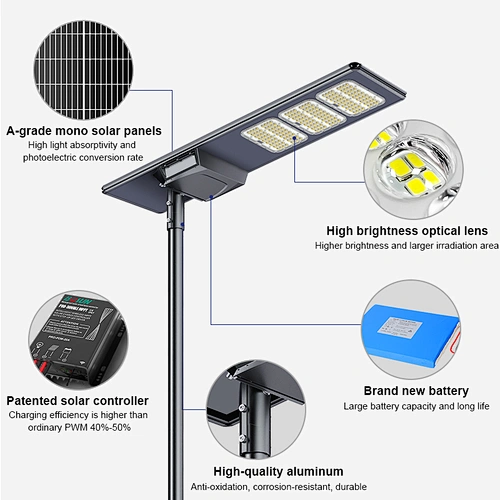
This model is positioned as a sealed integrated solar lighting system—designed as a coordinated system rather than a simple assembled lamp.
The BS-FY Series represents the pinnacle of solar lighting efficiency and durability. Designed specifically for high-temperature and high-dust environments (such as deserts and coastal regions), this series integrates BOSUN’s proprietary Pro-Double MPPTtechnology with a revolutionary Fully Sealed Panel Design. Delivering an industry-leading 220LM/W, the BS-FY ensures that your project benefits from maximum illumination with minimum energy consumption.
220LM/W Ultra-Bright LED Technology
While standard solar lights range between 130-160LM/W, the BS-FY series utilizes industrial-grade LED chips to achieve a staggering 220LM/W.
-
Benefit: It provides higher ground illuminance (up to 12,000LM) using the same solar footprint, reducing the number of poles required for your project and lowering overall costs.
System Characteristics
-
High luminous efficiency class: 220 lm/W
-
Battery system: LiFePO4
-
Controller reference: Pro-Double MPPT
-
Outdoor protection rating: IP65
-
Integrated structural design and automatic operation logic (system-level integration)
Solar Lights for Outdoor: Application-Driven Configuration
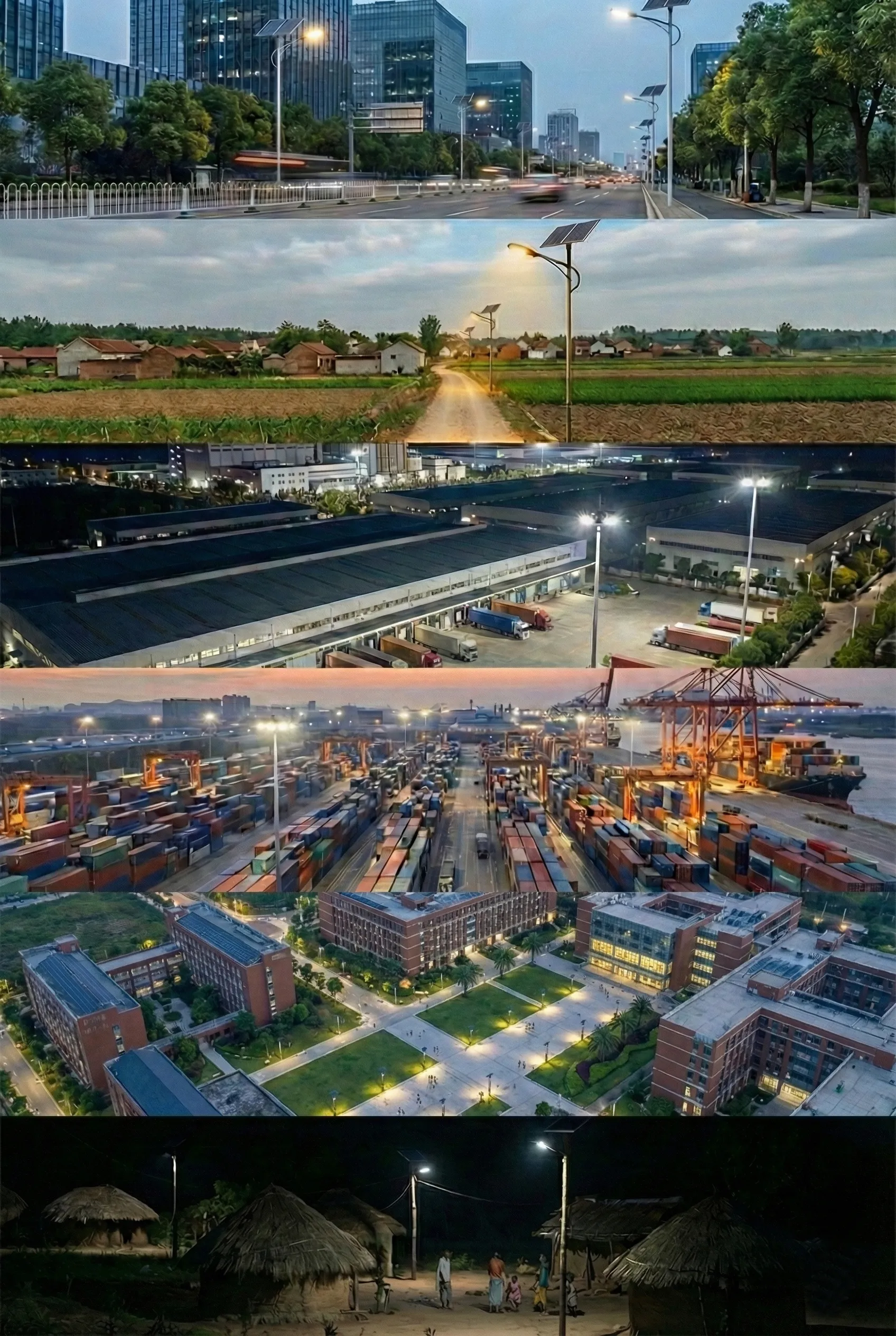
Outdoor solar lighting is highly scenario-dependent. In India, typical outdoor applications include:
-
rural roads
-
industrial parks
-
logistics zones
-
campuses
-
off-grid villages and community roads
Each scenario changes the required:
-
lumen output and optical distribution
-
battery capacity and autonomy
-
panel size and harvest margin
-
pole height, spacing, and wind-load design
-
installation design and maintenance plan
This is why custom configuration is essential for reliable project delivery.
Solar Street Light with Pole Price in India: A System Perspective
A pole system is not an accessory. It is part of infrastructure safety.
A true solar street light with pole price typically includes:
-
pole structural design and material selection
-
wind resistance considerations
-
foundation design scope (civil works)
-
mounting stability and anti-theft considerations
-
cable routing protection and electrical grounding logic
-
corrosion protection aligned to environment
In infrastructure projects, structural reliability can be as critical as lighting performance—especially for roadside safety and long-term maintenance.
Solar Street Light with Battery Price: Storage Logic That Determines Project Stability
Battery cost is not just a line item—it is the core of runtime stability.
A defensible solar street light with battery price depends on:
-
battery chemistry choice (LiFePO4 is commonly selected for thermal stability and cycle-life logic)
-
usable capacity under operating profile
-
cycle life expectations under climate stress
-
safety management and protections
-
autonomy planning for cloudy/rainy periods
A low battery budget often becomes a high maintenance budget later.
Solar Street Light Automatic On/Off: What “Standard” Actually Means
Automatic operation is standard in modern solar street lighting systems.
Typical solar street light automatic on off logic includes:
-
light sensor detection (dusk/dawn)
-
controller logic for switching and protections
-
energy management scheduling
-
optional smart dimming logic (profile-based runtime optimization)
The real engineering question is not “does it turn on/off,” but:
-
how stable is the switching under dust/aging conditions?
-
does the operating profile protect battery life?
-
does dimming logic match the energy model and autonomy target?
Installation & Maintenance Logic for India Conditions
Correct installation design often reduces long-term cost more than any “feature upgrade.”
Key engineering points that matter in India outdoor conditions:
-
solar panel tilt optimization for local solar resource
-
shading avoidance (trees, signage, new buildings)
-
drainage planning and water ingress risk control
-
grounding system and surge protection logic
-
structural reinforcement where wind loads are significant
-
panel cleaning cycle planning in dust environments
-
commissioning checklist for controller settings + profile tuning
When these are ignored, the project shifts from “renewable infrastructure” to “constant maintenance.”
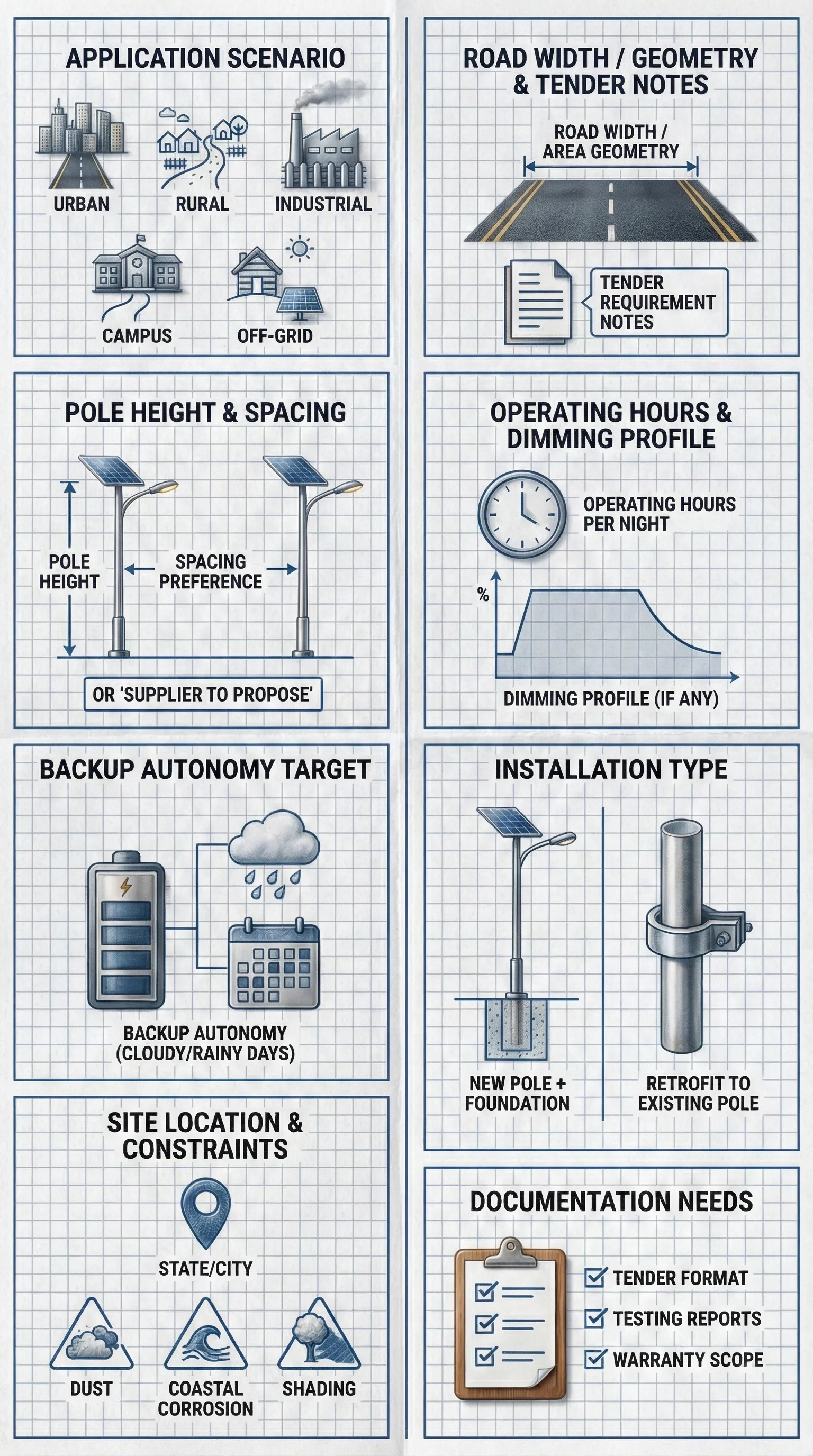
The Fastest Way to Get an Accurate Solar Street Light Price in India
If you want a quote that is actually engineering-grade, prepare these 8 inputs (or ask your supplier to propose them with assumptions):
-
Application scenario (urban/rural/industrial/campus/off-grid)
-
Road width / area geometry + any tender requirement notes
-
Pole height and spacing preference (or “supplier to propose”)
-
Operating hours per night + dimming profile (if any)
-
Backup autonomy target (how many cloudy/rainy days)
-
Installation type: new pole + foundation or retrofit to existing pole
-
Site location (state/city) + constraints (dust, coastal corrosion, shading)
-
Documentation needs (tender format, testing reports, warranty scope)
This single checklist eliminates most “low quote, high failure” outcomes—because it forces the configuration logic into the open.
FAQ
Solar street light with pole price in India
A solar street light with pole price depends on the complete system scope: lighting requirement, battery autonomy, panel capacity, controller logic, and—critically—pole structural design and civil foundation scope. For infrastructure projects, the pole and foundation are part of safety design, not optional accessories.
Best solar street light in India
The best solar street light in India is defined by system stability: illumination outcome, charging efficiency in monsoon/cloudy periods, battery lifecycle under heat, and configuration transparency that can survive tender scrutiny. It is rarely the lowest upfront price.
Solar street light with battery price
A solar street light with battery price is driven by battery chemistry, usable capacity under your operating profile, thermal stability, cycle-life logic, and autonomy planning. Battery selection is a system decision—changing it changes the whole project reliability curve.
Solar street light automatic on off
Most systems use light sensors + controller logic to turn on at dusk and off at dawn automatically. The engineering value is in stable control behavior, protection logic, and energy scheduling that extends battery life and keeps brightness consistent.
Solar panel street lights price in India
Solar panel street lights price in India is determined by panel efficiency class, sizing margin for local weather, battery storage requirement, controller harvest optimization logic, and installation standards. The correct benchmark is total system performance, not panel wattage alone.
Why BOSUN
Experience
BOSUN Lighting was founded in 2005 and has over two decades of lighting industry experience.
BOSUN Lighting was founded in 2005 and has over two decades of lighting industry experience.
Expertise
We build solar street lighting as a system: illumination design + energy model + storage autonomy + charging optimization. We support professional lighting design logic (e.g., DIALux modeling approach) for scenario-based configuration.
We build solar street lighting as a system: illumination design + energy model + storage autonomy + charging optimization. We support professional lighting design logic (e.g., DIALux modeling approach) for scenario-based configuration.
Authority
BOSUN states Pro-Double MPPT controller technology as part of its solar energy management solution set, positioned for improved energy harvest compared with conventional controller approaches .
BOSUN states Pro-Double MPPT controller technology as part of its solar energy management solution set, positioned for improved energy harvest compared with conventional controller approaches .
Trust
We treat “price” as a configuration outcome. That means we can discuss the quote in engineering terms: what the system is designed to achieve, what assumptions are used, what autonomy is targeted, and what scope is included for structure and installation.
Next Step: Request a Configuration-Based Quote
If you send the 8 inputs above (even partial), an engineering-grade quote can be built around:
-
scenario-based lighting design logic
-
energy budget and operating profile
-
autonomy requirement
-
system-level bill of configuration
That is the fastest path to a solar street light price in India that can be defended, delivered, and kept stable through real outdoor conditions.