Smart Pole Deployment for Business and Industrial Property Infrastructure in Malaysia
author: Aurora
2026-01-26







Infrastructure Context for Business and Industrial Property Development in Malaysia
Business and industrial properties in Malaysia are increasingly expected to operate with higher standards of safety, sustainability, and operational transparency. Outdoor Lighting infrastructure, particularly lighting and monitoring systems, plays a critical role in supporting daily operations, asset protection, and long-term facility management.
Conventional lighting infrastructure, typically designed as single-function assets, often results in fragmented systems, increased maintenance complexity, and limited visibility at the infrastructure level. As operational environments become more complex, integrated and system-oriented solutions are required.

Key Infrastructure and Lighting Challenges in Business and Industrial Environments
Based on observed project conditions and typical industrial property requirements in Malaysia, the following challenges are common:
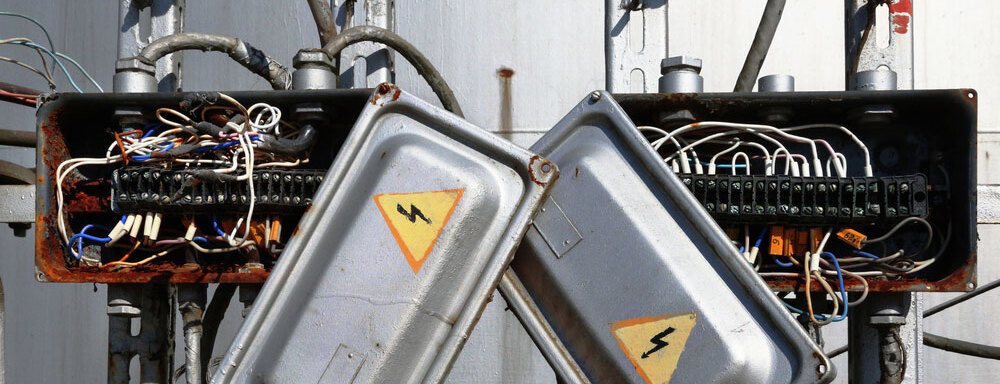
- High humidity and frequent rainfall are affecting outdoor electrical equipment
- Distributed site layouts increase installation and maintenance workload
- Limited nighttime visibility is impacting safety and operational efficiency
- Lack of centralized monitoring for lighting, security, and environmental data
- Growing demand for energy-efficient and sustainable infrastructure systems
Solution Overview: Smart Solar Pole as an Integrated Infrastructure Platform
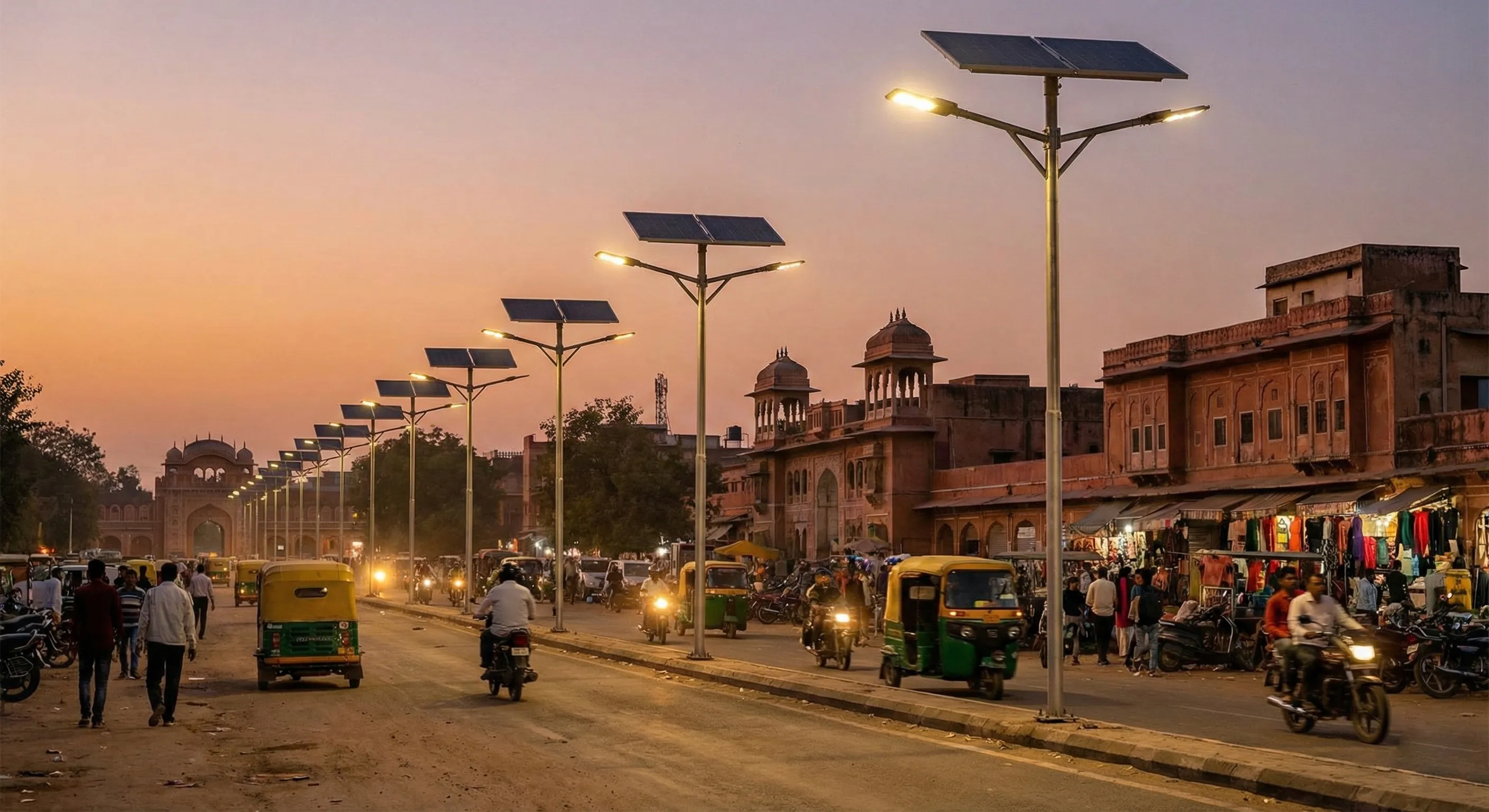
To address these challenges, a smart pole system was deployed as a unified infrastructure solution for business and industrial properties in Malaysia.
Rather than installing separate systems for lighting, surveillance, communication, and monitoring, the project adopted a consolidated pole-based architecture. The deployed solution is based on the smart pole platform with IoT remote monitoring, like our smart pole system with IoT remote monitoring.
Rather than installing separate systems for lighting, surveillance, communication, and monitoring, the project adopted a consolidated pole-based architecture. The deployed solution is based on the smart pole platform with IoT remote monitoring, like our smart pole system with IoT remote monitoring.


This system approach reduces the number of standalone installations while enabling centralized control and future scalability.
Why This Smart Pole 18 Architecture Solves Real Project Challenges?
System Integration Logic
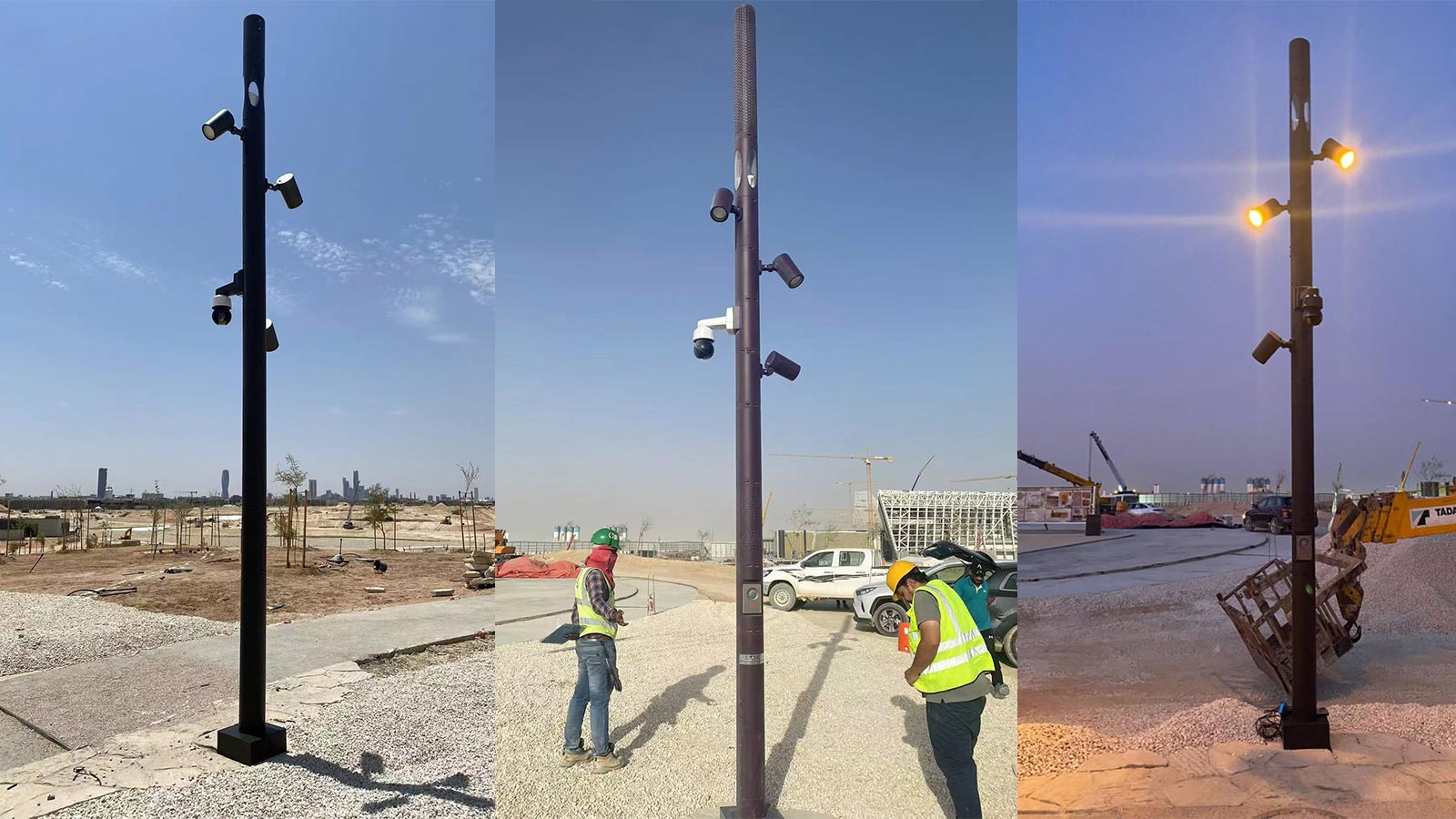
The smart pole supports the integration of solar lighting, environmental sensors, surveillance cameras, intercom systems, wireless communication modules, and LED displays. This consolidation reduces physical clutter and simplifies infrastructure planning.
Environmental Adaptability
All components are designed for outdoor operation in humid and high-rainfall environments. Enclosure protection and standardized mounting improve long-term system stability.
Modularity and Scalability
Each functional module operates independently within the smart light pole architecture, allowing future upgrades without replacing the core infrastructure.
Centralized Operation and Management
IoT-based communication enables centralized monitoring of lighting status, environmental data, and security systems, reducing manual inspection requirements.
Core System Architecture and Functional Design
Lighting Role
Integrated solar LED lighting provides consistent illumination for operational areas while reducing reliance on grid power.
Energy System Logic
Solar energy supports autonomous operation and aligns with sustainability objectives common in industrial property developments.
Communication and Control Architecture
Network-based communication protocols enable real-time data transmission to centralized monitoring platforms.
Structural Considerations
The pole structure is designed to support multiple mounted devices while maintaining mechanical stability for long-term outdoor use.
Working Principle in Real-World Project Conditions
During daily operation, lighting is managed autonomously while sensors and surveillance devices continuously collect operational data. Abnormal conditions can be identified remotely, enabling targeted maintenance actions rather than routine manual checks.
Project Case Study: Smart Infrastructure Deployment in Malaysia
Project Background and Existing Conditions
The project serves a business and industrial property environment requiring improved outdoor lighting, monitoring, and infrastructure management. Prior to deployment, infrastructure consisted of conventional lighting and independent monitoring devices, resulting in fragmented systems and limited visibility.

Smart Pole 18 Project in Malaysia
Solution Design Logic
A consolidation-driven design approach was adopted. Smart poles were selected to integrate multiple infrastructure functions into a single system platform, reducing complexity and improving manageability.
Implementation and On-Site Deployment
Deployment followed site assessment and functional zoning. Smart poles were installed at key operational areas. On-site commissioning included testing of lighting operation, sensor data transmission, surveillance feeds, and centralized monitoring interfaces, as reflected in the real project images.

Smart Pole 18 Project in Malaysia
Observed Engineering Impact (Before vs After)

Before Deployment
- Single-function lighting infrastructure
- Disconnected monitoring systems
- Manual inspection-based maintenance
After Deployment
- Integrated lighting, monitoring, and surveillance
- Centralized system oversight
- Reduced maintenance intervention
Planning Considerations for Similar Projects in Malaysia
Site layout and functional zoning
Environmental exposure conditions
Energy autonomy requirements
Communication network planning
Lifecycle maintenance strategy
Environmental exposure conditions
Energy autonomy requirements
Communication network planning
Lifecycle maintenance strategy

Long-Term Value and Replicability
The deployed smart pole system demonstrates strong potential for replication across business and industrial properties in Malaysia, supporting long-term infrastructure modernization.
Hot-Selling Smart Poles For Smart City


FAQs about the Smart Pole Project in Malaysia
Is a smart pole suitable for Malaysia’s climate?
Yes. The system is designed for humid and high-rainfall outdoor environments.
Yes. The system is designed for humid and high-rainfall outdoor environments.
Can multiple devices be integrated on one pole?
Yes. Lighting, sensors, cameras, and communication modules can be integrated.
Yes. Lighting, sensors, cameras, and communication modules can be integrated.
Does the system require grid power?
The solar-based design supports autonomous operation in suitable conditions.
The solar-based design supports autonomous operation in suitable conditions.
How is maintenance managed?
Remote monitoring enables targeted maintenance rather than routine manual inspections.
Remote monitoring enables targeted maintenance rather than routine manual inspections.
Is the system scalable?
Yes. Modular design allows future expansion without structural changes.
Yes. Modular design allows future expansion without structural changes.