Urban Public Space Meets Smart Pole: Enabling Sustainable Infrastructure in Saudi Arabia
author: Aurora
2026-01-23







Smart & Sustainable Lighting for Urban Public Space Development in Saudi Arabia
Saudi Arabia is undergoing a large-scale transformation of its urban environment driven by Vision 2030, with a strong emphasis on livability, public safety, digital infrastructure, and sustainable city development. Major cities are expanding public boulevards, civic plazas, mixed-use districts, and pedestrian corridors that are designed not only for mobility, but also for social interaction, tourism, and economic vitality.
In this context, urban public spaces require infrastructure that goes beyond basic illumination. Lighting assets are increasingly expected to support connectivity, monitoring, and centralized management like the SCCS system while maintaining visual harmony and long-term reliability. This has positioned smart poles as a foundational element in Saudi Arabia’s next generation of public-space infrastructure.

Pain Points: Infrastructure and Lighting Challenges in Saudi Arabia’s Urban Public Space Environments
Urban public spaces in Saudi Arabia face a distinct set of challenges shaped by climate, scale, and usage intensity.
Environmental challenges
Extreme heat, high UV exposure, dust storms, and occasional sand abrasion accelerate material degradation and reduce the service life of conventional lighting assets.
Operational constraints
Large public areas such as promenades and civic squares require continuous nighttime operation, yet traditional lighting systems lack centralized monitoring, making fault detection slow and reactive.
Safety and efficiency issues
Public spaces host pedestrians, cyclists, events, and vehicular traffic simultaneously. Fragmented lighting and disconnected surveillance systems limit situational awareness and response capability.
Maintenance and lifecycle cost pressures
Dispersed poles, separate CCTV masts, and standalone communication equipment increase civil works, maintenance frequency, and long-term operational expenditure.
Sustainability and policy requirements
National urban policies increasingly demand energy efficiency, infrastructure consolidation, and readiness for smart city platforms. The Saudi Arabian government heavily supports smart pole policy as a cornerstone of its Vision 2030 smart city and sustainability initiatives. Through partnerships with companies like Huawei and Viper Networks.

Why Smart Poles 13 Are Essential for Urban Public Spaces in Saudi Arabia?
Urban public spaces demand infrastructure that is multifunctional, resilient, and scalable. Smart poles directly address these requirements by consolidating multiple urban systems into a single, engineered structure.
For Saudi Arabia, smart poles are particularly well-suited because they:
- Provide integrated lighting, connectivity, and sensing without cluttering public spaces
- Reduce the number of physical assets required across large urban areas
- Support centralized monitoring and control aligned with smart city command centers
- Are structurally designed to withstand harsh climatic conditions
- By addressing environmental durability, operational efficiency, and system integration simultaneously, smart poles offer a practical response to the limitations of conventional urban lighting approaches.

Working Principle: How the System Operates in Real-World Conditions?
In operation, smart poles function as distributed urban infrastructure nodes. Each smart light pole supports continuous lighting while simultaneously collecting operational data and transmitting system status to a centralized management platform.
Automated fault detection, remote configuration, and adaptive lighting schedules reduce the need for manual inspection. This operational model improves reliability while ensuring that public spaces remain consistently safe, well-lit, and efficiently managed under varying environmental conditions.
Project Case Study: Riyadh, Saudi Arabia — Deployment of Smart Poles for Urban Public Spaces
Project Background & Key Challenges (Before)
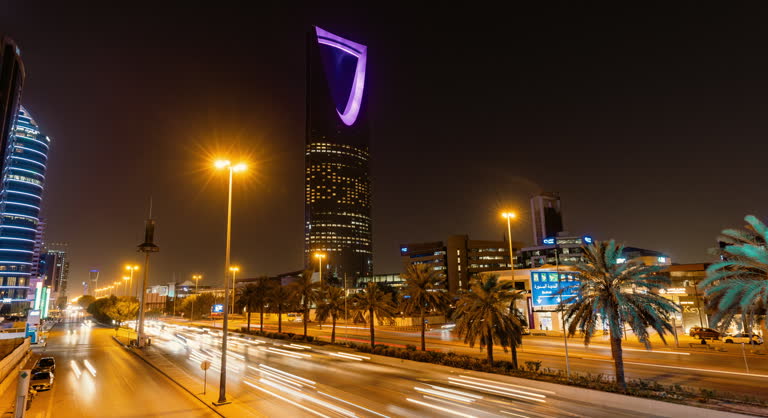
In Riyadh, large urban redevelopment zones and public boulevards were originally served by conventional street lighting and separately installed surveillance and communication infrastructure. This approach resulted in:
- Multiple standalone poles occupying limited public space
- Inconsistent lighting levels across pedestrian corridors
- Disconnected CCTV and lighting systems managed by different teams
- High maintenance workloads due to asset dispersion
- These limitations affected nighttime safety perception, operational coordination, and long-term maintenance efficiency.
How the Smart Pole Solution Was Designed?
The solution design focused on consolidation, durability, and future readiness.
Design principles
Minimize physical infrastructure while maximizing functional capability and visual consistency.
System integration strategy
Lighting and auxiliary urban functions were unified into a single smart pole platform.
Technology selection rationale
Smart poles were selected over conventional smart street lights due to their ability to support broader public-space functions beyond roadway illumination.
Product integration concept
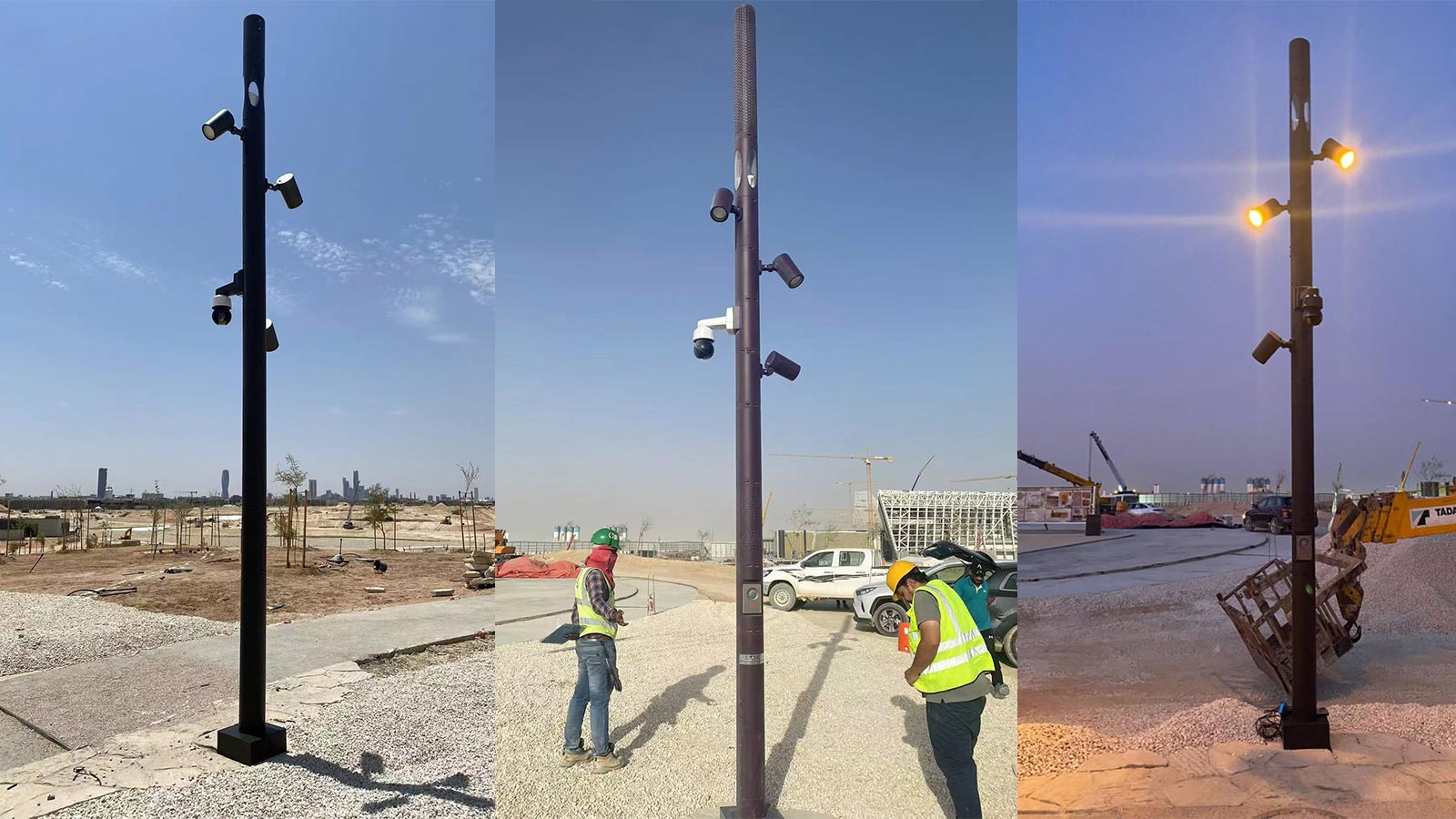
The smart pole system architecture represented by the referenced solution was applied as an integrated platform capable of supporting lighting and future smart-city functions within one structure.

Results & Impact
Before
Fragmented infrastructure with multiple asset types
Limited visibility into system performance
Higher maintenance effort and slower response times
Limited visibility into system performance
Higher maintenance effort and slower response times
After
Integrated lighting and urban functions within unified smart poles
Centralized monitoring and improved operational awareness
Reduced asset count and simplified maintenance workflows
The transition delivered tangible improvements in manageability, safety perception, and infrastructure efficiency.
Centralized monitoring and improved operational awareness
Reduced asset count and simplified maintenance workflows
The transition delivered tangible improvements in manageability, safety perception, and infrastructure efficiency.
Replicability & Long-Term Value
This deployment model is applicable to other Saudi cities and public developments, including promenades, cultural districts, and mixed-use urban centers. Its modular nature supports long-term scalability and alignment with national urban modernization goals.
Broader Impact: Scaling from Riyadh to Nationwide Infrastructure in Saudi Arabia
By standardizing smart poles across urban public spaces, Saudi Arabia can establish a coherent, future-ready infrastructure framework that enhances safety, sustainability, and digital governance nationwide.
Hot-Selling Smart City Light Poles


FAQs You May Concern
Are smart poles suitable for extreme desert climates?
Yes. When properly designed, they can operate reliably under high heat, dust, and UV exposure.
Yes. When properly designed, they can operate reliably under high heat, dust, and UV exposure.
Can smart poles integrate with existing city platforms?
They are designed to interface with centralized municipal management systems.
They are designed to interface with centralized municipal management systems.
Do smart poles replace traditional street lights in public spaces?
In many cases, they consolidate lighting and auxiliary functions, reducing the need for multiple structures.
In many cases, they consolidate lighting and auxiliary functions, reducing the need for multiple structures.
How do smart poles affect maintenance operations?
Centralized monitoring reduces manual inspections and improves maintenance efficiency.
Centralized monitoring reduces manual inspections and improves maintenance efficiency.
Are smart poles scalable for future urban services?
Their modular architecture supports future expansion without major reconstruction.
Their modular architecture supports future expansion without major reconstruction.