
Oil Palm Meets The Self-Cleaning Solar Street Light Project: Reform Africa's Palm Belt







Self-Cleaning Solar Street Light - Smart & Eco
This isn't science fiction; it's a practical innovation that reduces maintenance costs, improves worker safety, and ensures continuous lighting even in the harshest conditions. Let's explore how BOSUN Lighting brought this technology to life through a landmark project in Port Harcourt, Nigeria — one of Africa's largest oil palm-producing cities.


Pain Point – Challenges in Oil Palm Plantation Environments
- Reduced solar charging efficiency
- Shortened lighting duration and unstable output
- Frequent manual cleaning and high labor costs
- Increased risk of system failure
- Corrosion and structural degradation in metal components
Solution – BOSUN’s Self-Cleaning Solar Street Light for Oil Palm Regions
In palm oil plantations, where airborne oil mist, dust, and pollen often coat solar panels, ordinary solar street lights lose up to 30–40% of their energy efficiency within months. Self-cleaning models solve this through automated PV cleaning systems or robotic solar panel cleaning mechanisms, keeping panels clean without manual labor.
In short, it's a smart, self-maintaining energy system — ideal for plantations, rural roads, and industrial estates where maintenance access is difficult and costly.
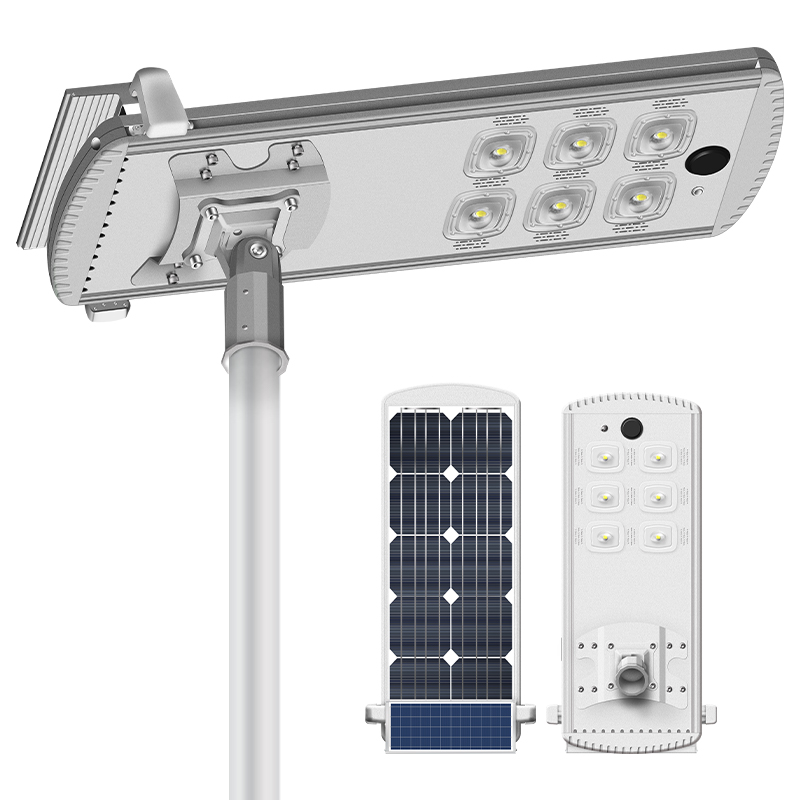

Components of a Self-Cleaning Solar Street Light
Solar Panel with Anti-Dust Coating
High-efficiency monocrystalline PV module.
Nano-hydrophobic layer resists dust adhesion and watermarks.
Integrated wiper or robotic cleaning arm that removes debris automatically.
Automated Cleaning System
Brush or waterless robotic wiper programmed for scheduled cleaning cycles.
Controlled by a microprocessor or sensor system that detects surface dust buildup.
Operates using a fraction of the stored energy (typically <2% of daily generation).
Lithium Battery Pack
LiFePO₄ battery with 8–12-year lifespan. Stores solar power during the day for nighttime illumination and cleaning operations.
Intelligent Pro-Double MPPT Solar Charge Controller
MPPT-based controller with dual functions: manages charging/discharging and triggers cleaning mechanisms. Smart update: optional IoT module for remote performance monitoring.
LED Light Fixture
High-lumen output (160–200 lm/W) LED lamp fixture ensures wide-area lighting.
Aluminum alloy housing with IP66 waterproofing — essential for humid palm environments.
Self-Cleaning Pole Structure
Galvanized steel or aluminum pole, height 7–9 meters. Built-in cable management and optional anti-corrosion coating for oil palm regions.
Working Principle: How Self-Cleaning Solar Street Lights Work
Daytime Operation:
The solar panel captures sunlight and converts it into electricity.
The Pro-Double MPPT solar charge controller charges the LiFePO₄ battery with high efficiency.
At midday or low-light detection, the automated PV cleaning system activates for 30–60 seconds, wiping dust or oil film off the panel surface.
Nighttime Operation:
As dusk falls, the controller switches on the LED lamp fixture.
The light operates on programmed brightness modes (100% in early hours, 50–70% after midnight).
Energy is drawn from the stored battery power.
Continuous Monitoring
The intelligent controller monitors temperature, battery voltage, and panel performance.
Remote management (optional 4G/LoRa module) allows operators to track cleaning cycles and light status in real time.
This fully automated loop ensures consistent brightness and near-zero manual cleaning — an ideal match for large agricultural or industrial operations.

Why the Oil Palm Industry Needs Self-Cleaning Solar Street Lights?
Airborne oil particles and dust accumulate rapidly on solar panels.
Remote locations make manual maintenance expensive and logistically difficult.
High humidity and rainfall can lead to corrosion and wear on components.
Traditional solar lighting systems often fail or underperform in these conditions. That's why BOSUN Lighting engineered a solution specifically designed for agricultural and plantation environments — the self-cleaning, anti-dust solar street light.
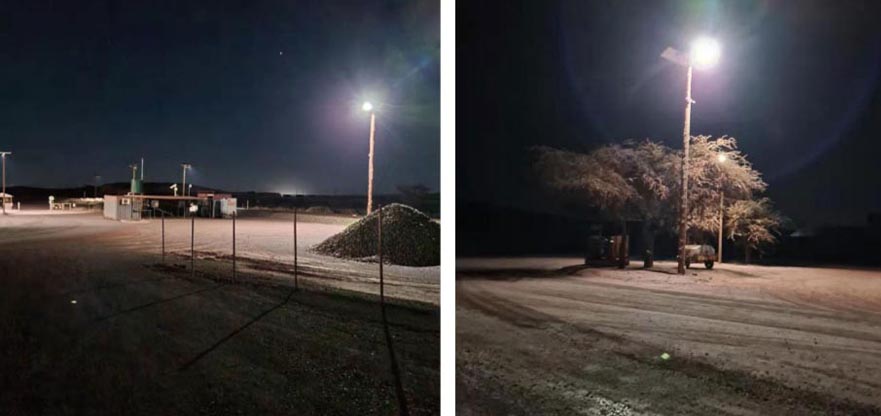
Project Case Study: Port Harcourt, Nigeria — The Palm Belt Lighting Initiative
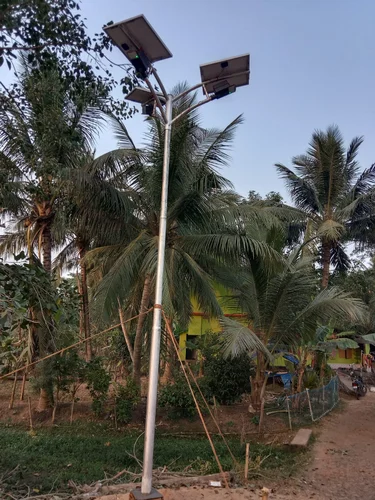


BOSUN proposed a hybrid lighting solution:
Self-cleaning solar street lights with anti-dust nano coating.
Automated PV cleaning system using robotic arms that sweep across the panel surface twice daily.
Reinforced aluminum poles treated with marine-grade powder coating to resist oil film corrosion.
Integrated IoT-based monitoring for remote diagnostics and cleaning cycle adjustment.
The BOSUN engineering team conducted:
Solar resource analysis: Average 5.1 kWh/m²/day in Port Harcourt.
Environmental study: High humidity (80%), moderate winds, and a dust index of 0.15 mg/m³.
Road assessment: 9 km of internal plantation roads requiring 6.5 m pole height and 40 m spacing.
Based on findings, the team recommended 180W LED self-cleaning solar street lights with 400W solar panels and 192Wh LiFePO₄ batteries.
Comprehensive Planning Considerations & Advantages of Installing Self-Cleaning Solar Street Lights
During the design phase, BOSUN's engineers considered every environmental and operational factor:
Dust and Oil Exposure: Anti-dust surface + automated PV cleaning = sustained 95% energy output.
Maintenance Access: Remote IoT control reduced manual inspection frequency from monthly to once per quarter.
Rainfall Patterns: Drainage channels integrated into the solar module frame to prevent waterlogging.
Temperature Range: Components tested for 0°C–60°C to withstand tropical heat.
Wildlife Safety: Enclosed cabling to prevent damage from monkeys and birds common in plantations.
Power Continuity: 3–5 days autonomy designed for consecutive cloudy or rainy days.
Reduced Maintenance Costs: Automated cleaning eliminated monthly labor visits, saving over $300 per unit annually.
Longer Equipment Lifespan: Stable operating temperatures and clean PV surfaces prevent performance degradation.
Continuous Illumination: No downtime due to dirty panels or uncharged batteries.
Smart Scheduling: Cleaning and lighting cycles are fully programmable via IoT.
Zero Water Usage: Robotic system uses dry brushing — critical in areas where water resources are limited.
Carbon Reduction: Each lamp saves ~0.4 tons of CO₂ annually compared to diesel-powered lights.
Safer transport of workers and vehicles through well-lit plantation roads.
Reduced nighttime theft and accidents within the estate.
Modular design allows for easy replication in other palm oil estates or remote agricultural zones across Africa.

Broader Impact: From Port Harcourt to Africa’s Palm Belt
The model is also attracting interest from palm oil producers in Ghana, Côte d'Ivoire, and Cameroon, where similar environmental challenges exist. By reducing maintenance costs and ensuring reliability, BOSUN’s solution supports Africa’s broader goals for renewable energy and rural industrialization.
Lighting the Future of Agricultural Sustainability Globally
The BOSUN team's project in Port Harcourt proves that technology tailored to the environment — anti-dust coatings, automated cleaning, and intelligent controls — can overcome the unique challenges of the palm oil ecosystem.
As Africa continues to balance industrial growth with sustainability, self-cleaning solar street lights will play a central role in creating safer, greener, and more efficient agricultural infrastructure — one palm-lined road at a time.
FAQs You May Concern
Oil palm environments generate high dust and oil mist, which quickly reduces solar charging efficiency. A self-cleaning system prevents energy loss and minimizes maintenance.
How does the self-cleaning mechanism work?
The system uses an automated wiping and brushing structure to remove dust, soil, and oil residues from the solar panel surface, restoring optimal light absorption.
Are self-cleaning solar street lights suitable for tropical climates?
Yes. BOSUN’s system is designed for humid, hot, and rainy climates—especially areas like Nigeria, Ghana, Malaysia, and Indonesia.
How often does manual cleaning become necessary?
Maintenance frequency can be reduced by up to 90%, depending on the severity of dust and oil contamination.
Can this solution lower plantation operating costs?
Absolutely. By reducing manual labor and system failures, plantations achieve lower long-term costs and improved operational efficiency.
Is there a real project example in Africa?
Yes, BOSUN has completed an oil-palm plantation lighting project in Port Harcourt, Nigeria, with proven performance in harsh environments.
Product specifications & datasheets
Customized project proposals
One-on-one engineering support
Complete solar lighting solutions for oil palm plantations
Hot-Selling Solar Street Light


 Lighting the Wilderness: A Win-Win Solution with Double-Arm Separated Solar Street Lights at the Outdoor Camping Base
 Lighting the Way: Mexico's 500PCS Solar Street Lamps Highway Turnkey Project
 Lighting the Heights: How an Oil Palm Self-Cleaning Street Light Project & Wind-Solar Hybrid System Breathed Life into a Remote Foothill Campus
 Enhancing Football Fields with Solar Solutions
 Light The Soccer Pitch for Excellent Competition Visual Experience
 Installing 300 Pcs Nighttime Solar Street Lights with Pole in Rural Residential Areas
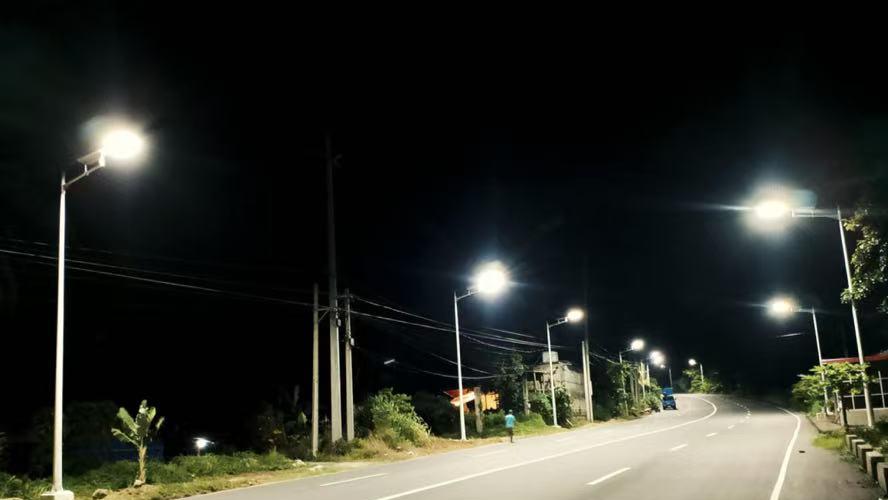 Revitalize villages and Shed Light With Sustainable Energy Lighting
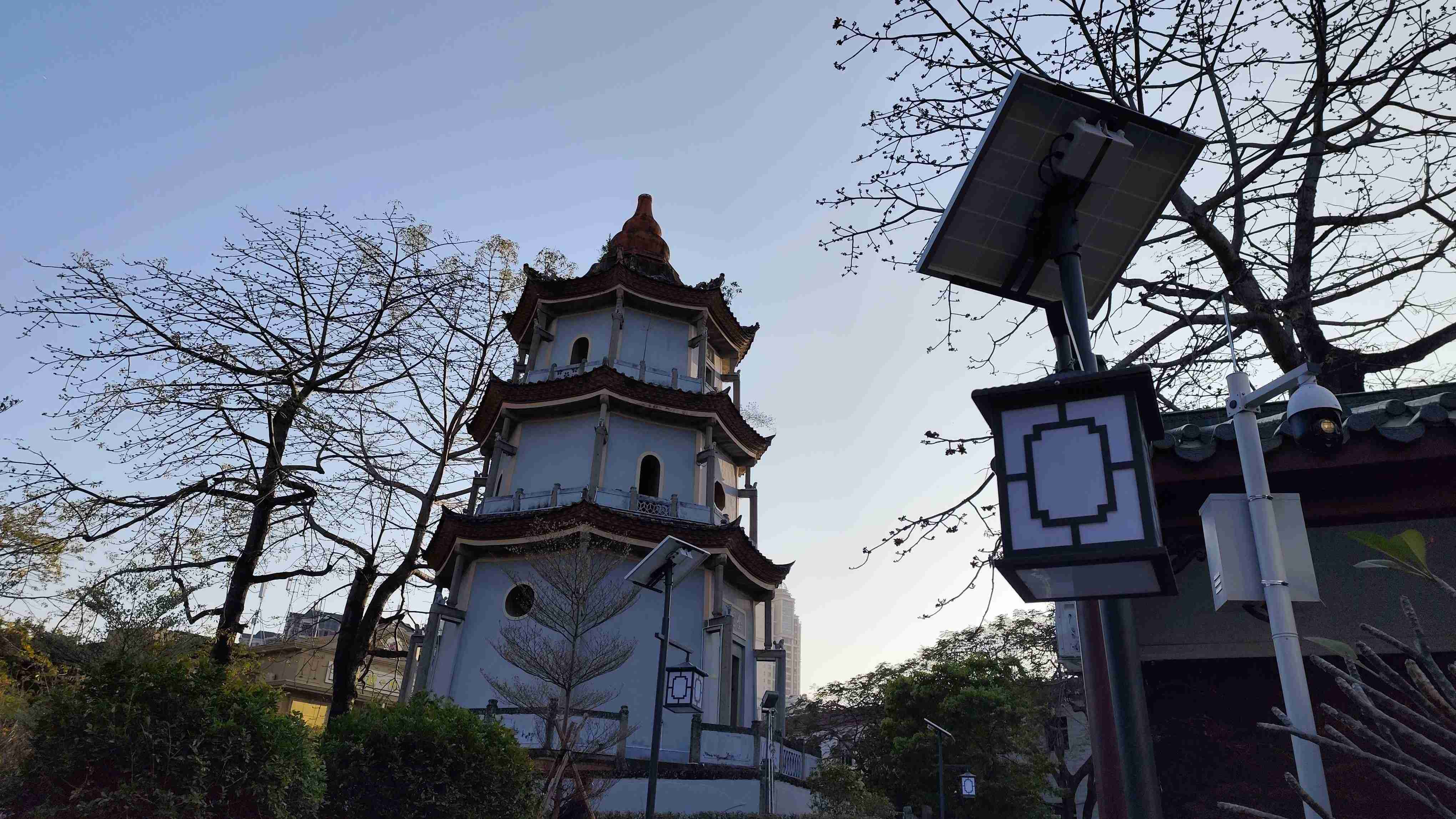 A Poetic Space Where Chinese Architecture and Solar Street Light Intertwined
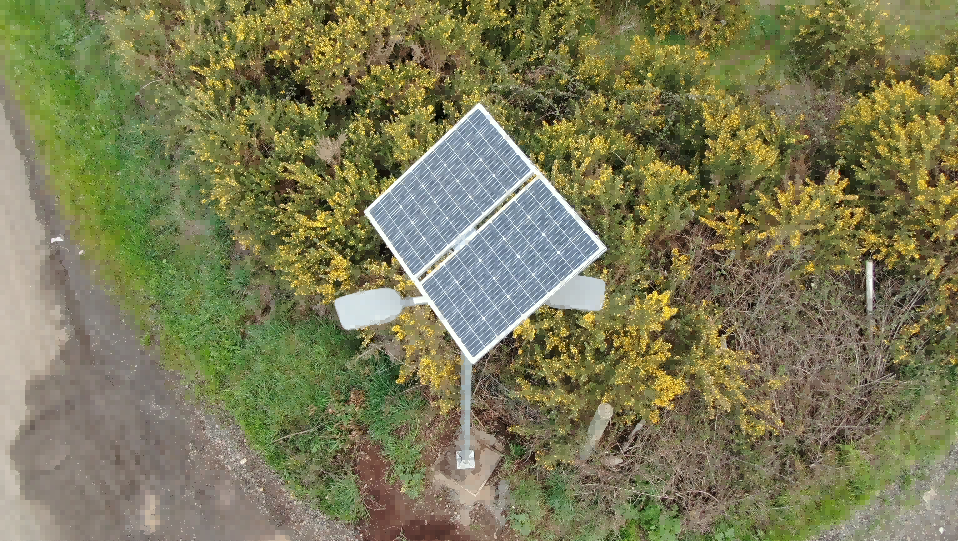 80W Commercial Solar Street Light Project in Burkina Faso, Africa
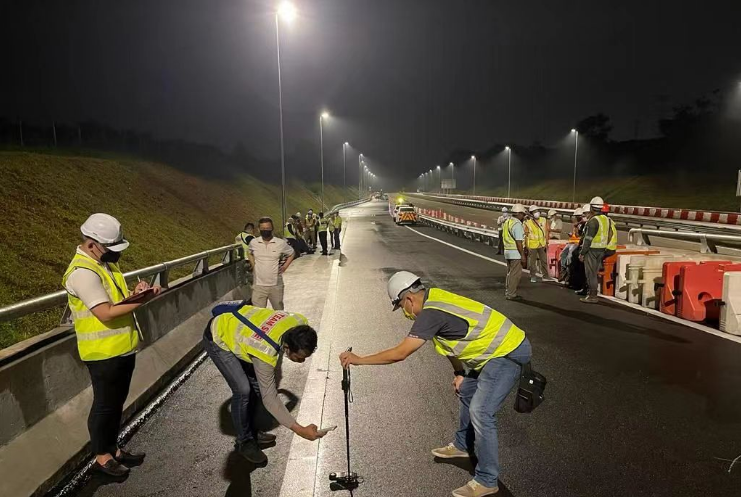 Top Engineering LED Solar Lights Project In Philippines
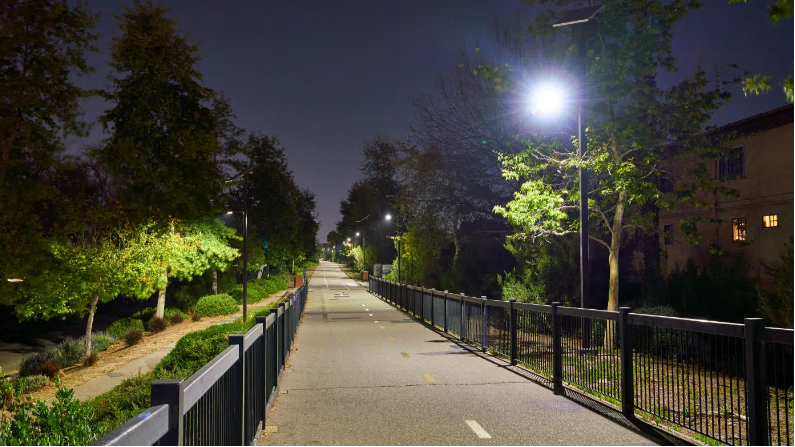 Best Solar Pathway Lights at Residential Area Project Accomplished!
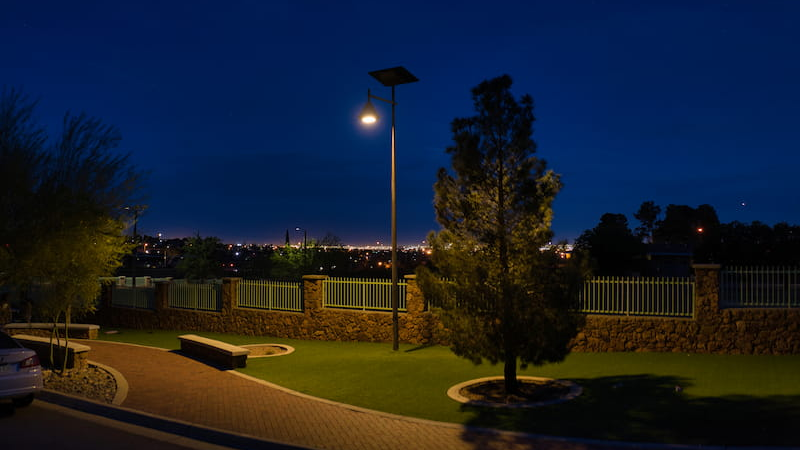 Solar Powered Park Lights for Large Public Park Engineering Project
 500 pcs of BS-GMX Series Solar Street Light for Jordan Highway
 Successful Completion Of The Split Solar Powered Street Lights Project in Jiangxi Province
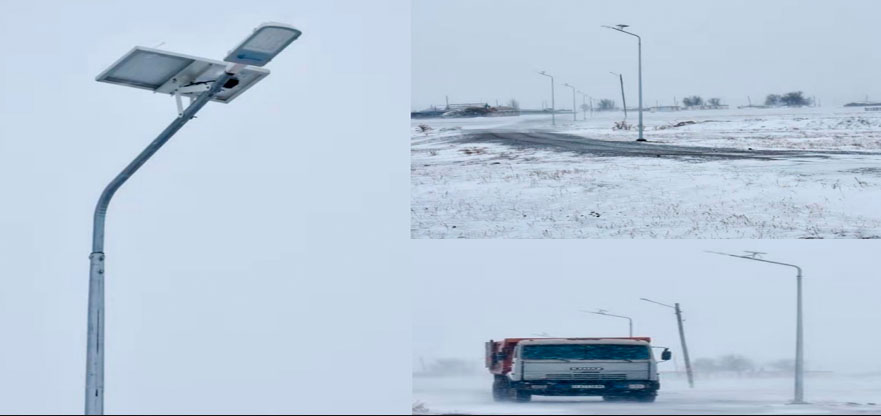 GMX All-In-Two Solar Street Light Performs Well In Extreme Weather
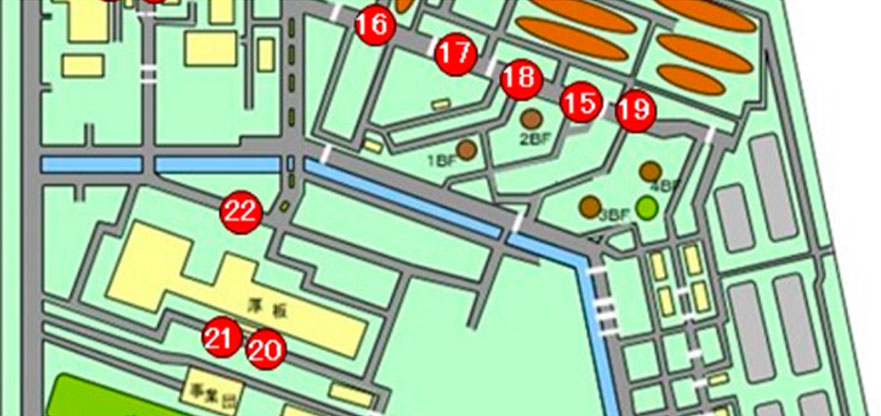 Solar Street Light Box for Japanese Projects: Design & Solution – BS-BDX Series
 All-In-One Solar Street Light for Government Seaside Park Project in Middle East
 Congrats To The Separated Solar Street Light Project Successfully Installed In South Africa
 QBD 60W Solar Street Light in Nigeria
 60W All-In-One Solar Street Light Project in Vietnam